

1971: Bangladesh emerges from the crucible of war; Bhutan steps forward as the first nation to acknowledge Bangladesh’s independent identity. That early gesture, adorned as simple, fearless, deeply human, set the tone for a friendship rooted not in grand declarations but in quiet, enduring warmth. Over five decades later, that warmth is no longer confined to memory or diplomacy; it is now anchored in architecture.

The newly completed Bangladesh Chancery Complex in Bhutan was designed by Rafiq Azam, principal architect of Shatotto architecture for green living. It stands as an architectural symbol to that long-standing mutual affection. A building poised between nations, mountains, and plains. It carries the humility that has shaped the relationship from the start.
The project was led by the landscape. The site location in Thimphu was not just scenery; it was an acting instruction. The rolling hill at the site became the project’s principal designer, dictating scale, orientation, and restraint. Where diplomatic buildings often seek to assert identity through monumentality, this one resists the urge. It does not attempt to outshine Bhutan’s monumental landscape.
Instead, it listens to it.
The natural slope was preserved with almost meditative care. The structure stays grounded. Its horizontality calms against the dramatic verticality of the mountains. The building seems to breathe with the terrain, not dominate it. If architecture can exhibit good manners, this one does.
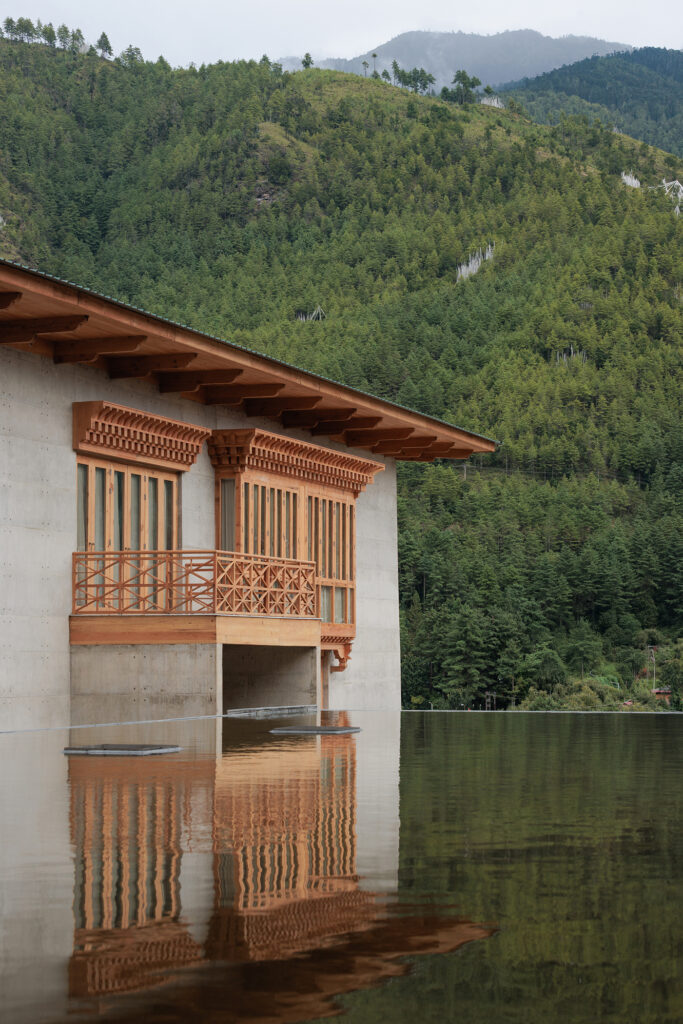
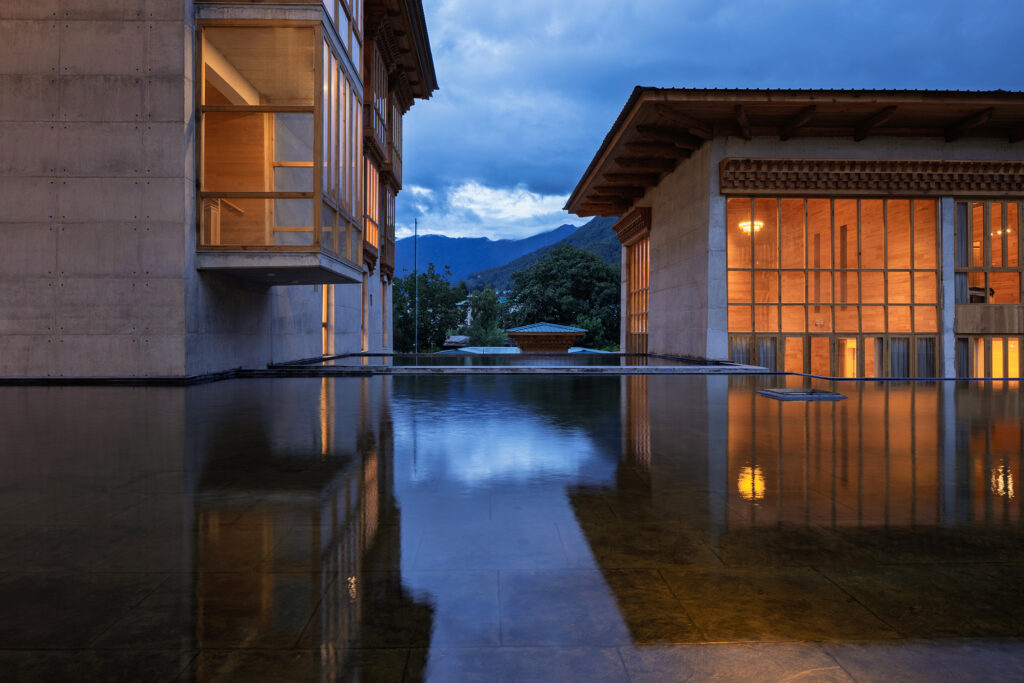
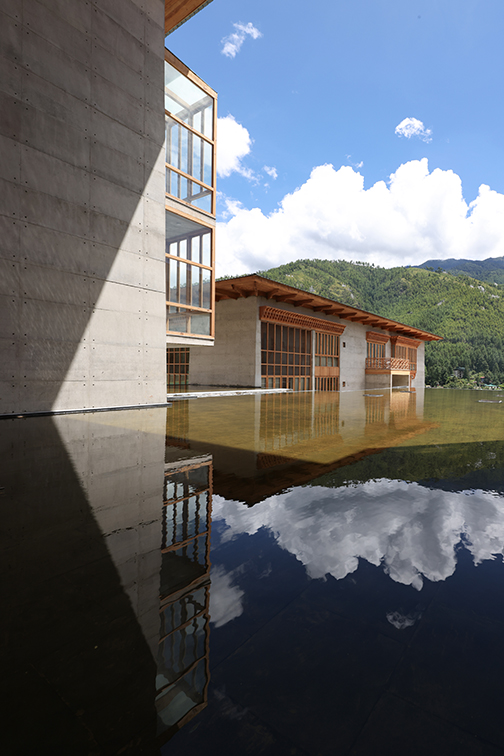
Among Azam’s most poetic gestures is a water body, 6’’ of depth, placed at the heart of the composition. Coming as a symbol, a fragment of the Bay of Bengal was transported to the foothills of the Himalayas.
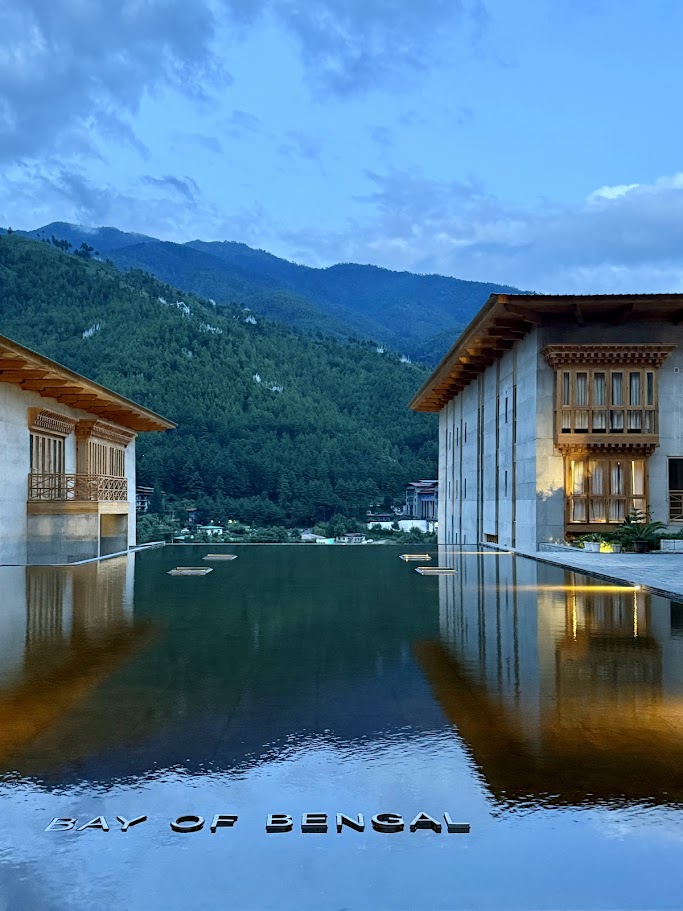
According to him, the Bay of Bengal owes its very existence to the ancient sediments carried down from the Himalayan rivers. “If the mountains gave birth to the bay,” Azam reflects, “then I wanted to bring the bay back to its parents.” In this embassy, water becomes geography, memory, and tribute. It divides the plan into two halves and, in doing so, creates a social window with a visual corridor that preserves the view of the hills from the road instead of blocking it. The mountains are framed, not fenced, by the architecture.
The water softens the formality of diplomacy. It slows the visitor and invites contemplation. The water body becomes a silent companion to the movement of people. It reminds both nations of their shared ecological lineage.
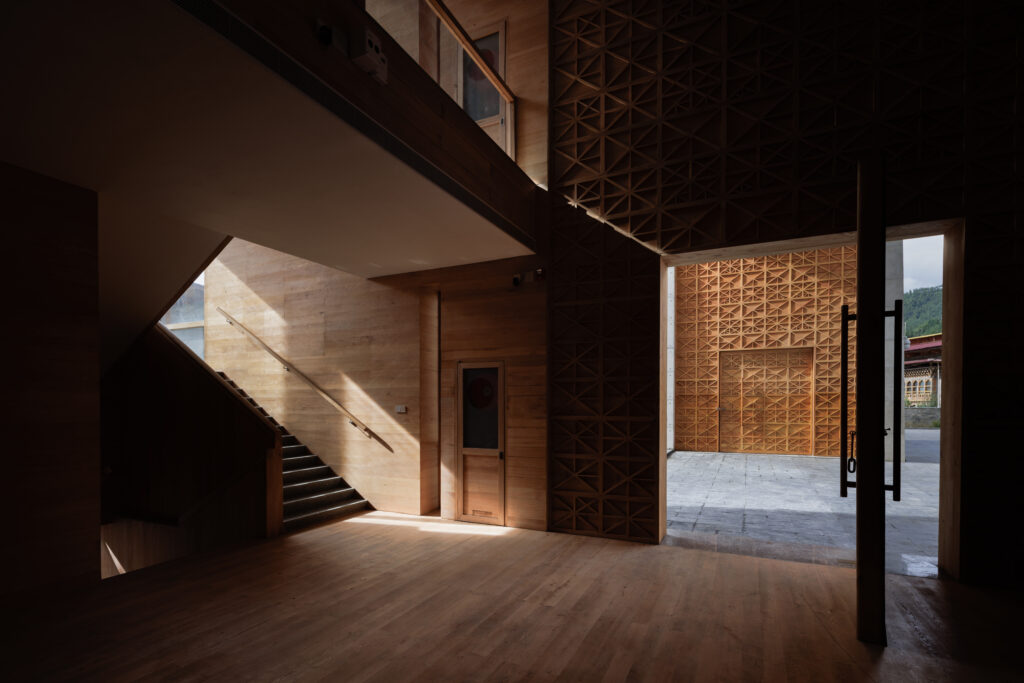
The embassy unfolds through layered thresholds—public, semi-public, administrative, residential—and yet each retains a sense of openness. Daylight, Azam’s lifelong collaborator, enters the building gently, guided through calibrated apertures that bring the mountains indoors without glare or dominance.
Corridors align with views. Courtyards invite the sky. Rooms breathe with controlled scale and restrained materiality.
Nothing in excessive; everything in consideration.
Diplomatic compounds are almost always defined by the character of their boundaries, high walls, controlled sightlines, and opaque fortifications. Here, that language is rewritten with transparency as trust.
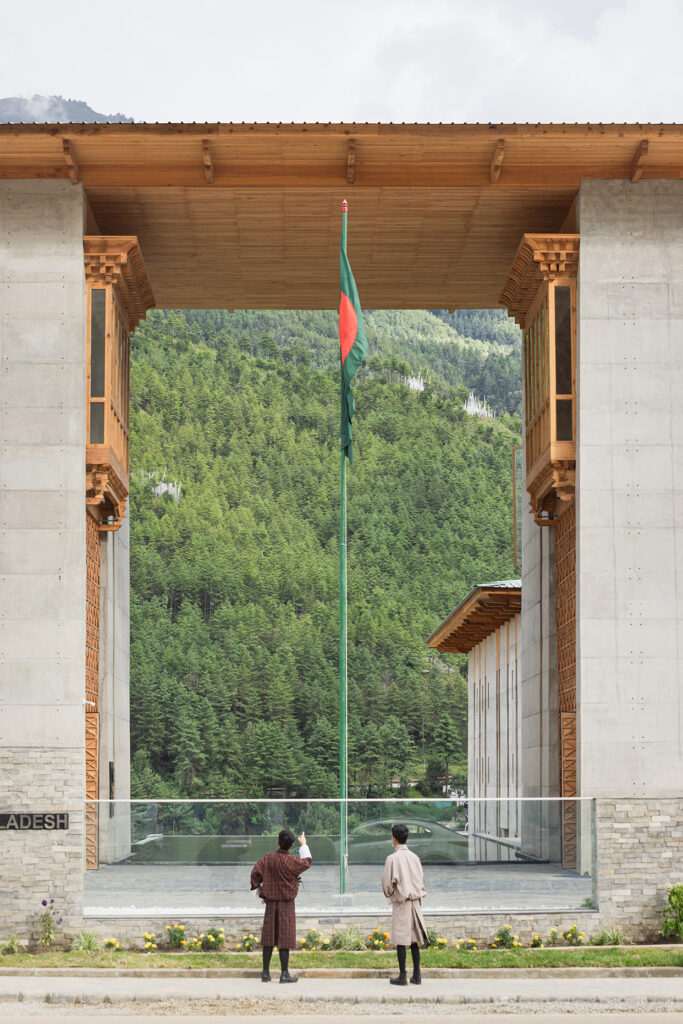
The boundary wall is made of glass, a rarity in diplomatic architecture anywhere in the world.
This act of transparency is not naive; it is intentional. It expresses respect for the Bhutanese characteristic of being humble, trustworthy, open, and acknowledges a relationship where security need not be synonymous with seclusion. The glass wall dissolves visual barriers and symbolically rejects the architecture of suspicion.
The embassy is protected, yes, but not hidden. It stands in the open, as friendships should.
Although this is Bhutan’s first-ever concrete building, acting as an engineering milestone, it draws curious locals eager to see “a new kind of structure”, but it also remains deeply rooted in the nation’s architectural ethos. Every modern line carries a quiet echo of the past. An architecture built with modern techniques but carries a traditional soul.
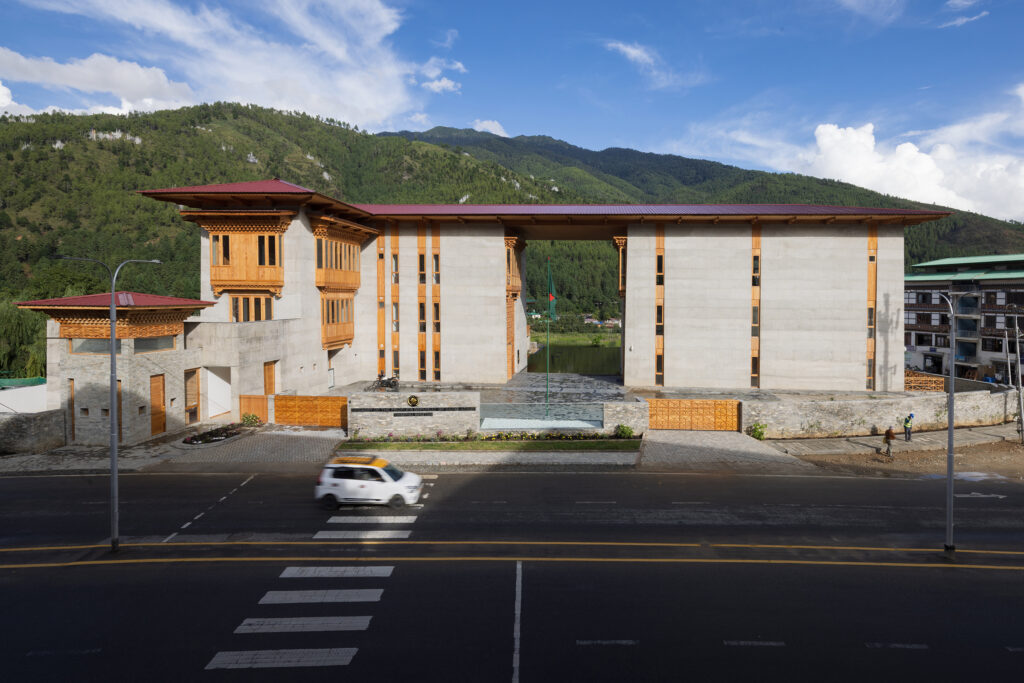
Azam integrated traditional Bhutanese elements in contemporary ways. The pitched roof adheres strictly to Bhutan’s mandated colour and structural codes. Timber-inspired textures and proportions resonate with local vernacular rhythms. Window configurations hint at traditional motifs without imitation.
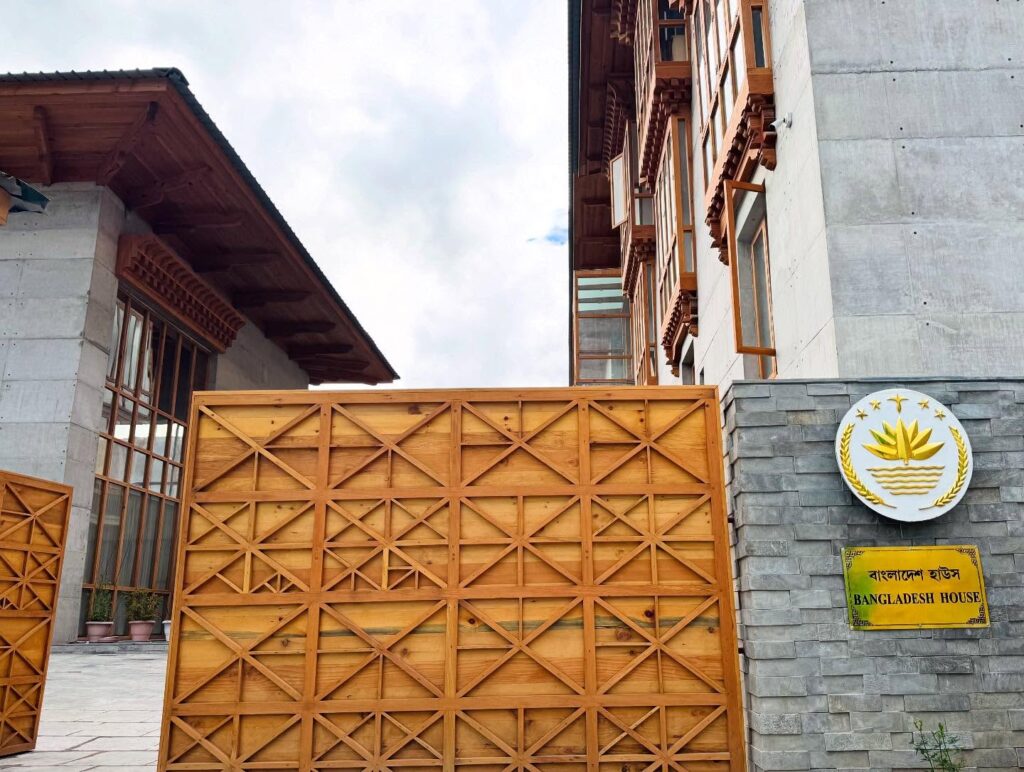
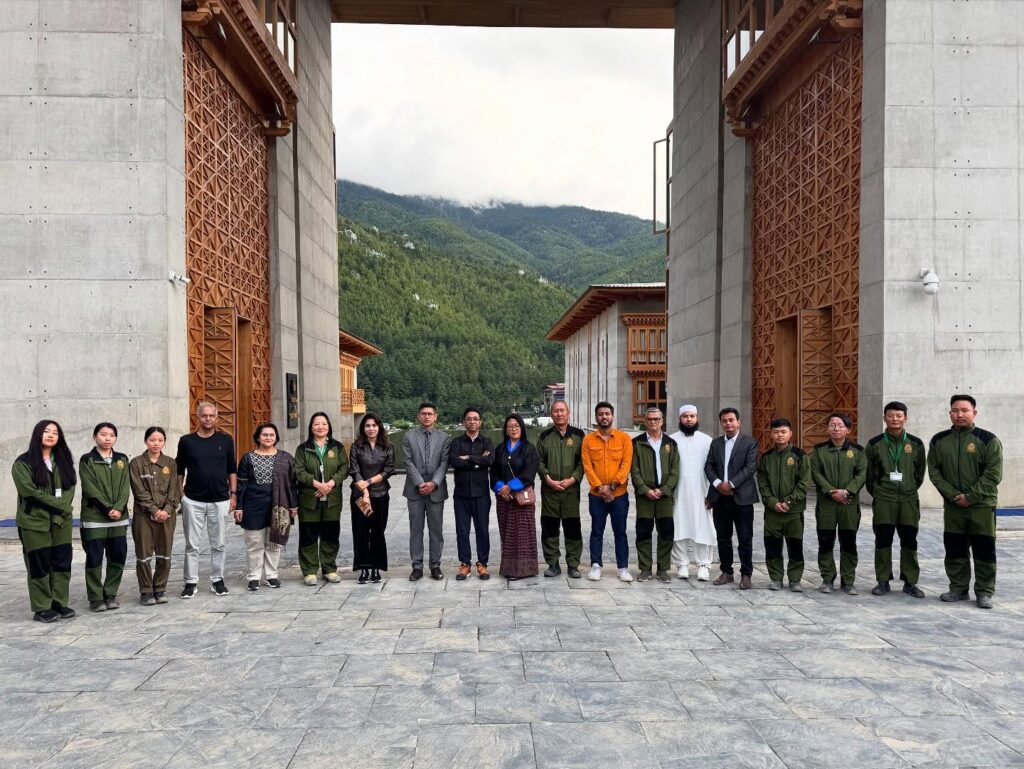
At the entrance, a pair of main wooden gates offers a distinctly Bangladeshi signature. Crafted with patterns inspired by Jamdani, the heritage Bengali textile, the gates stand as a textile-translated threshold, weaving two identities together. Bhutan’s architectural discipline meets Bangladesh’s artisanal grace in a gesture that is both subtle and deeply intentional.
This design is not mimicry or rebellion; it is respectful articulation, studied, and deeply intentional.
No story of this embassy is complete without Rebecca Gurung, Bhutan’s first architect and the local consultant for the project. Her involvement adds a layer of meaning that transcends technical collaboration as a cultural bridge in human form.
She and Rafiq Azam studied architecture at the same institute in Dhaka, sharing corridors, classrooms, and formative influences. Decades later, they met again. This time across national boundaries, shaping a diplomatic building that symbolises friendship between their two countries.
For Rebecca, this project became an emotionally full-circle journey. The nation that taught her architecture, Bangladesh, returned to her life not as an academic memory, but through a built reality she helped realise in her homeland.
And in guiding Bhutan’s first concrete building into existence, she carved a new chapter in her country’s construction history.
For Bhutanese construction workers who are accustomed to rammed earth, stone, and timber, the embassy became a site of learning and technical knowledge exchange. Concrete construction, formwork logic, reinforcement detailing, and modern waterproofing systems introduced them to building methods rarely used in their country.
The project became a quiet laboratory of skill-sharing:
Bangladeshi architectural logic translated into Bhutanese craftsmanship.
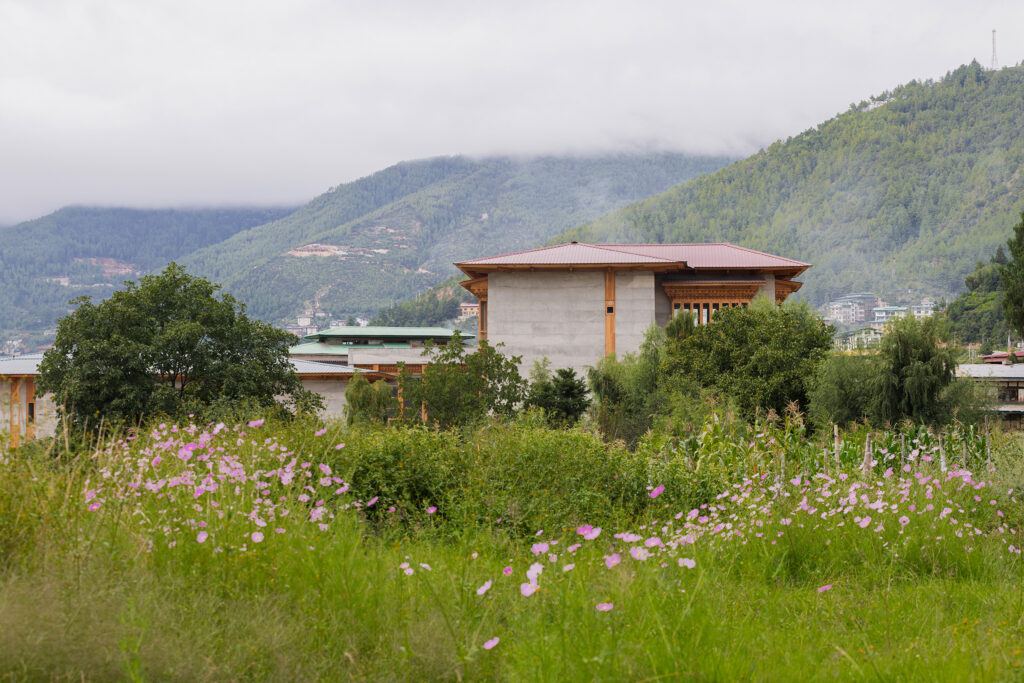
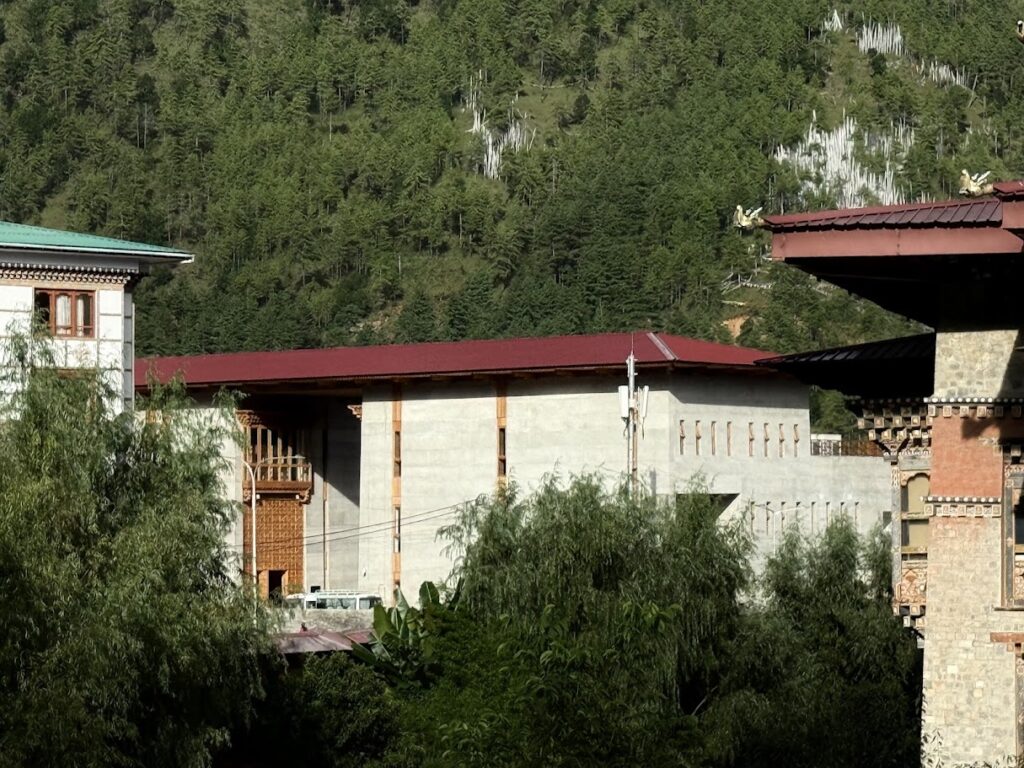
And despite the shift from rammed earth to concrete, the project remained consciously sustainable. Bhutan’s cement and steel are locally produced, and the country’s small scale keeps transportation distances short, thereby minimising the carbon footprint. The building’s environmental responsibility lies not only in design philosophy but in pragmatic resource consciousness.
The building has been warmly endorsed by the Bhutanese government and embraced by the public with an enthusiasm rarely seen for diplomatic architecture. Curiosity turned into appreciation; unfamiliarity turned into acceptance. More importantly, it stands as Bhutan’s first formally designed embassy building, setting a new benchmark for architectural diplomacy in the country.
Some may question whether the building is too understated, or whether the uncompromising contextuality dilutes a distinct Bangladeshi visual identity. But Azam’s architecture argues something more nuanced: that confidence can be quiet, representation can be subtle, and dignity need not be loud. Its quietness is deliberate, rather than a counterproposal to the loudness that often defines diplomatic architecture.
This embassy expresses Bangladesh through clarity, empathy, transparency, and proportion, not performance.
Here, architecture becomes another form of foreign policy, an extension of diplomacy, one that builds relationships as gently as Bhutan once recognised a newborn nation. Its transparency signals trust. Its water signifies shared geography. Its construction process bridges skills. Its collaboration honours cultural ties and personal histories. This is not a building that shouts sovereignty. It whispers friendship.
Ultimately, the Bangladesh Chancery Complex in Bhutan stands as a structure that holds two histories gently in its palms. An architecture that belongs to both nations.
Shaped by mountains, yet carrying the waters of a distant bay.
Rooted in Bhutan’s traditions, yet speaking in a Bangladeshi accent. It is modern without arrogance, symbolic without spectacle.
A building born from the recognition of 1971, now giving architectural homage to that recognition.
In its transparency, its humility, its careful listening, the embassy does what good architecture and good diplomacy always aim to do:
bring people closer, without walls, without noise.


Project Details
Project Name: Bangladesh Chancery Complex, Bhutan
Address: Plot No. HS1-752, Hejo-Samtenling, Thimphu, Bhutan
Client: Ambassador, Embassy of People’s Republic of Bangladesh, Thimphu, Bhutan
Consultants: SHATOTTO architecture for green living
Principal Architect: Prof. Ar. Rafiq Azam (FIAB)
Other team member: Project Architect Tohidul Islam, Local Architect Rebecca Gurung, Vetting Engineer Shamsul Alam, Electrical Engineer Mohiminol Islam & Kaka Dawa, Mechanical Engineer Ershed Jaman, Cost Engineer Nazrul Islam
Interior Design: ideas pty ltd iftekhar + design associates, Zannat Jui & Tohidul Islam
Project Engineer: Md Oahedul Islam
Structural Engineer: Progressive Research & Consulting Service
Construction Firm: Vajra Builders Private Limited
Copyright © 2025 ArchBiz Magazine. All Rights Reserved.