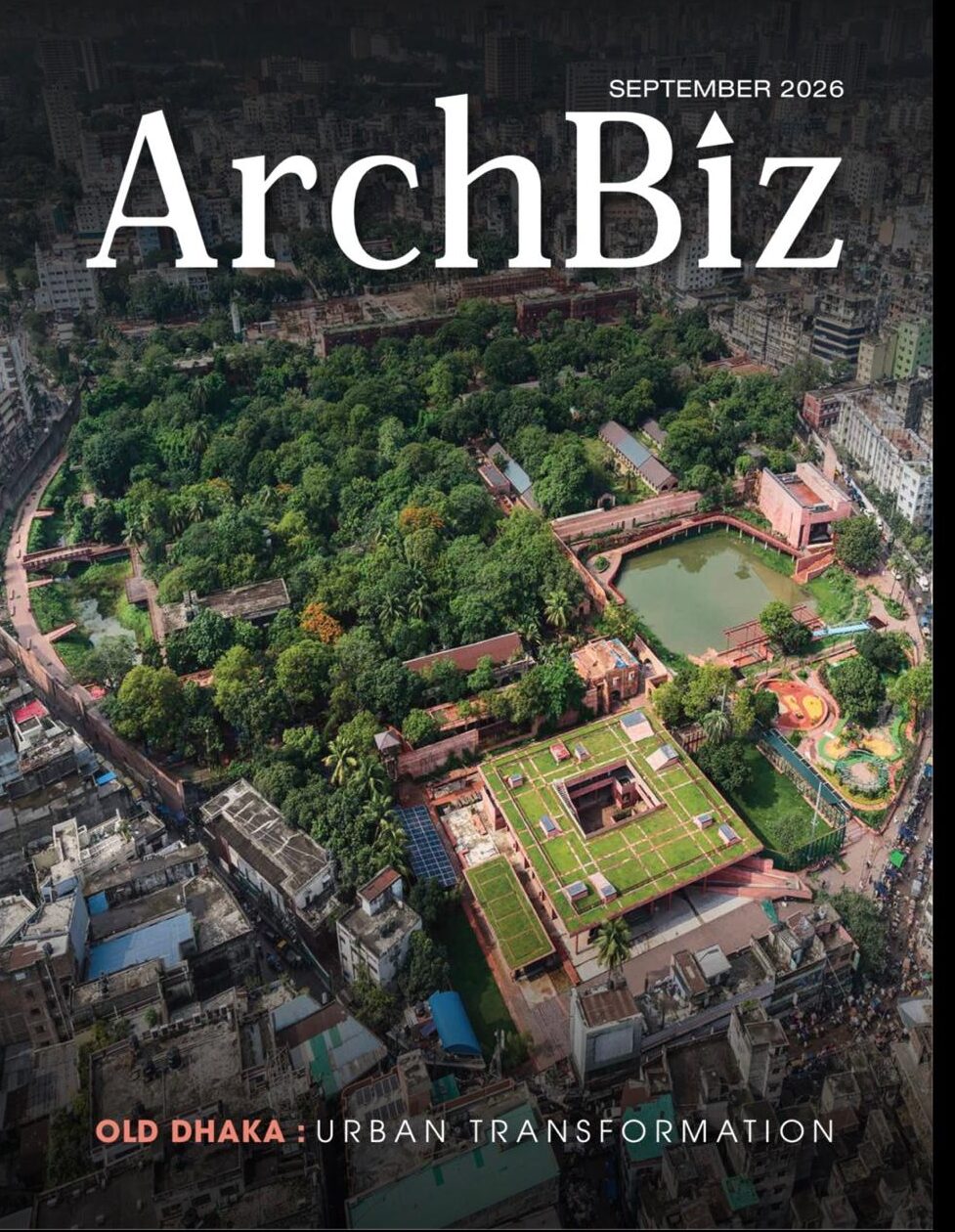


Written By Samira Ahsan
In Bangladesh, architecture has long lived in tension between rapid urbanization and human need. As cities grow upward and outward, one question quietly persists: Who are we building for?
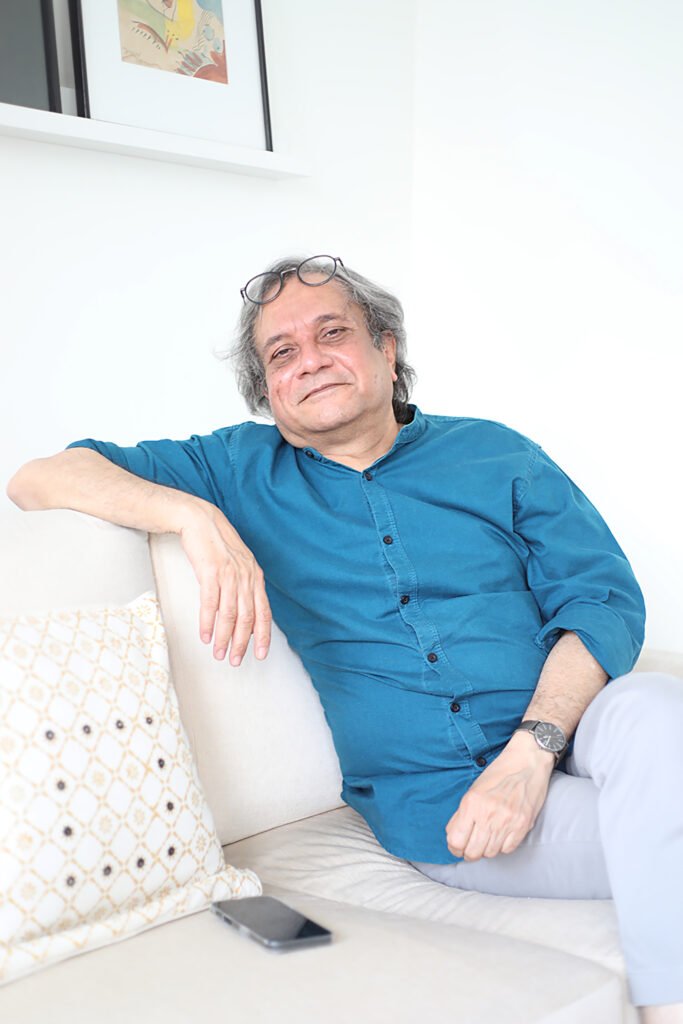
Few voices address that question with the clarity of Fuad Hassan Mallick, Professor and Dean, School of Architecture and Design, Brac University. His career includes extensive research and professional work in the United States, Europe, and the Middle East, along with two decades of institution building at Brac University.
His work focuses on climate, community, and the dignity of everyday life in a crowded, unpredictable country. In this conversation, he shares why architecture has drifted from its purpose and why it must be gently returned to human ground.
The Beginning and Stepping Forward
Prof. Mallick did not enter academia after completing his architecture degree at BUET in 1983. Soon after, he received a Commonwealth Scholarship to study in the UK, earning a Masters of Philosophy in Architecture (Housing Studies) from the University of Newcastle upon Tyne in 1987. He later completed a PhD in Environment and Energy Studies at the Architectural Association in London (1994).
Teaching was not his initial ambition, “I come from a family of teachers and professors”, but it became a lifelong calling.
Returning to Bangladesh, after his M.Phil studies he joined BUET in 1988. A difference of opinion regarding admission tests led him and several colleagues to resign in 1999. He received an opportunity to teach at Eastern Mediterranean University in North Cyprus (1999 – 2001). While at Brac University he went on leave to teach at Imam Abdur Rahman bin Faisal University in Saudi Arabia (2015 – 2018). Since 2023, he has been a visiting professor at the Graduate School of Design (GSD) at Harvard university.
In 2002, after returning from North Cyprus, joining Brac University to start its architecture program. He helped found the department, which has evolved into the School of Architecture and Design (SoAD), reflecting his belief that architecture and other design disciplines must work together for all to remain relevant.
A School Built on New Disciplines
Today, SoAD houses the Architecture Department, a Master’s in Disaster Management, and soon, an undergraduate program in the same field.
Prof. Mallick’s vision extends further:
“We have been teaching construction management. Now we’re expanding into interior design, fashion design, graphic design, product design, and more.”
He emphasizes that basic design education must be universal across all programs, not merely as technique, but as a way of thinking: analytical, structured, perceptive.
“The future of Bangladesh will be shaped not only by architects but by designers who can navigate complexity: climate, disasters, density, inequality, and rapid technological change.”
Context, Climate, and Crisis
Internationally, Prof. Mallick is known for research on thermal comfort, climate-responsive design, and disaster resilience.
“The core of my research focuses on building-climate interaction,” he says, “but I have also worked extensively on disaster management and low-income housing.”
For him, climate-responsive design in Bangladesh is not an option, rather the foundation of responsible architecture. Brac University integrates this philosophy in every studio, disaster management courses, and construction techniques.
“The intersection between architecture and disaster management lies in construction. Learning to build with profound respect for climate is critical.”
The New Campus as a Learning Environment
Brac University’s new campus offers openness in a city defined by noise, pollution, and enclosure.
Natural ventilation oriented for air flow.
Air-quality and energy-conscious cooling systems.
Rooftop solar panels that meet nearly a quarter of energy needs.
Generous greenery, daylight, and breathable spaces.
“In Dhaka’s dense, polluted urban landscape, the building offers relief. Natural light and ventilation are abundant, and air conditioning ensures optimal air quality with carbon-conscious design.” He adds, “For students, there’s also a matter of intangible learning on campus, which might often go unnoticed. Openness, light, air, greenery, birds, and free spaces create learning beyond classrooms. The campus itself is a teacher.”
Students learn climate-responsiveness not only in lectures, but by inhabiting a living example of it.
Design Curriculum and Global Experience
Prof. Mallick has taught worldwide and notes that the curriculum is surprisingly similar globally. The real difference lies in mindset:
“Bangladeshi students often enter architecture with no prior exposure. Hence, they must unlearn and relearn. Abroad, students already have structured ways of learning and organizing information.”
At Harvard GSD, he saw graduate students from multiple disciplines share a habit of absorbing and filtering information systematically. While Bangladeshi students are equally talented and hardworking, earlier education rarely nurtures analytical or creative thinking; a systemic issue, not an architectural one.
“We need change at the core level of primary, secondary, and higher education. Creative and rational thinking must be introduced early.”
He praises local students for resilience, work ethic, and generosity:
“International students have much to learn from our students, who navigate Dhaka’s chaos yet grow into capable professionals.”
Challenges of the Next Decade
On the greatest challenge facing architecture in Bangladesh, he expresses: “We are thinkers, problem-solvers, urban designers. We must work for people, not just for buildings.”
He recalls Master Architect Muzharul Islam:
“Architecture must serve people; not a privileged few, but the majority. Artistic qualities are essential, but the humanistic aspects are not measurable… One must love their land, people, and culture.”
Prof. Mallick emphasizes that community architecture is not charity; it is globally relevant and fundable.
“Funders will invest in solving the problems of ordinary people. Young architects must seek them out. This is a moral direction for our profession.”
A Message to Future Architects
“We must embrace emerging technologies, including AI, 3D printing, and robotics. AI can design, render, and analyze data. Architects must learn to collaborate with it to advance the profession.”
He stresses that human creativity is irreplaceable, and technology should augment, not replace it.
Closing Reflections
After decades in teaching, research, and global engagement, Prof. Mallick reflects:
“If I lived again, I would do the same thing. My only wish is that I had explored more countries earlier. But I returned to Bangladesh and built something lasting.”
He leaves one question to ponder: Why do Bangladeshi architects excel globally?
Perhaps it lies in his students’ resilience and a culture of taking architecture as a serious art form; their ability to navigate chaos, adapt quickly, work hard, and stay grounded. For Prof. Mallick, architecture has never been just a profession of producing objects. It is a discipline of understanding how people live, adapt, and survive. In a country that is both fragile and fiercely dynamic, that may be the most important design principle of all.
Copyright © 2025 ArchBiz Magazine. All Rights Reserved.