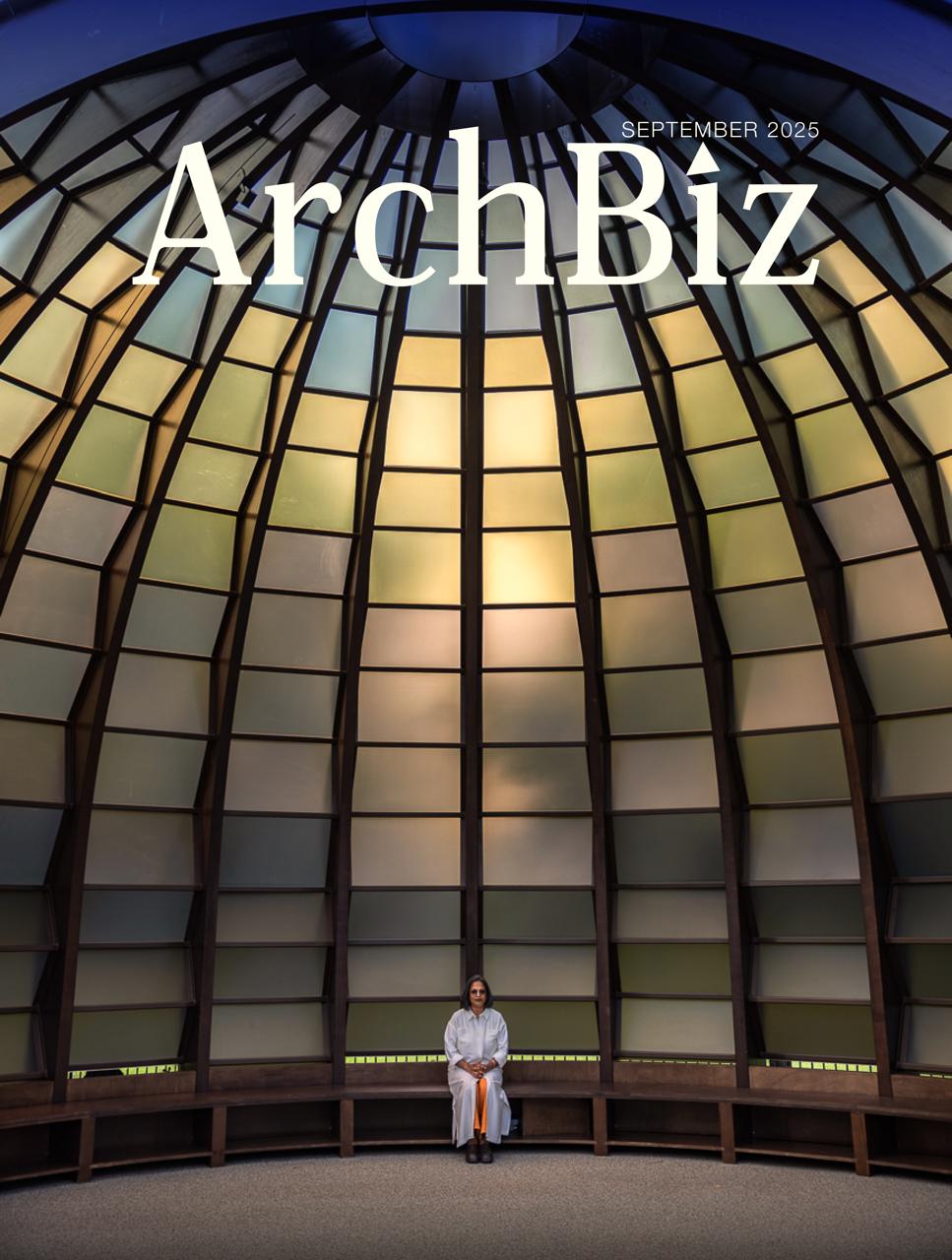


In Dhaka, the word moar refers to an intersection, a place where paths cross, directions change, and movement briefly pauses before continuing again. It is a fitting name for a project that sits precisely at such a crossing: between architecture and entrepreneurship, between space and community, between design and everyday life.

When architects Nabila Nowrin and Nahid Sharmin founded Moar in 2015, they were not simply opening a coworking space. They were experimenting with a different kind of architectural practice, one that designs environments for collaboration rather than buildings alone.
Their journey began years earlier, in the studio.
Two architects, two trajectories

Nabila and Nahid met while studying architecture at BRAC University. As in many architecture schools, the studio was not only a place for design but also a space where friendships were forged through shared intensity. Long nights, collective critiques, and the constant pressure to translate ideas into form shaped their early years.
Even then, their personalities offered a striking contrast.
Nabila grew up in Dhaka in a structured environment where freedom was carefully negotiated. Architecture school offered a rare opening. Studio hours justified late evenings and exploration beyond the usual boundaries of daily life. Alongside design, she developed a fascination with business, perhaps influenced by the fact that both of her parents were involved in the business world.
“I never consciously decided to become an entrepreneur,” she says. “But I was always curious about how businesses are created and maintained.”
Nahid’s journey had a different rhythm. Coming from Chittagong, she navigated Dhaka with a sense of curiosity and independence. Even as a student she experimented with entrepreneurship, launching a small boutique business. Although it did not succeed, it became an early lesson in learning by doing.
Later, while working at Bengal Foundation, Nahid observed organizational structures and operational systems closely. Over time she realized that observation alone was not enough.
“There is no end to learning,” she says, “but eventually you have to apply it.”
The Birth of Moar
After completing a Master of Design at the IIT Institute of Design in Chicago, Nabila first encountered the idea of coworking through spaces like 1871. At the time, the concept was intriguing, but its full potential became clear later.
In 2013, during a research project in São Paulo, she noticed that many young professionals, freelancers, entrepreneurs, designers, and consultants worked from shared coworking spaces. Instead of maintaining individual offices, they shared desks, meeting rooms, and basic infrastructure. The model immediately resonated with her.
The idea felt particularly relevant to Bangladesh. When she returned to Dhaka, she began discussing the concept with friends, and Nahid quickly became interested. The two architects then carefully developed the idea, discussing operational models, cost structures, and the dynamics of working together as business partners.
Eventually, they found a space in Banani 11. The landlord gave them seventeen days before the lease officially began. For most businesses, that timeline would have been impossible. For architects accustomed to rapid decision-making and construction logistics, it became a challenge they were ready to take on.
Working day and night, they transformed the empty interior, installing lighting, workstations, meeting areas, and shared spaces.
In July 2015, Moar officially opened its doors.
Teaching a city a new way to work
At the time, coworking was almost unknown in Bangladesh.
Many visitors who entered the building assumed Moar was a café or retail showroom. Explaining the concept became part of everyday work.
Gradually, people began to understand.
Moar offered freelancers, startups, consultants, and small businesses access to professional infrastructure without the cost of maintaining an office. Individuals could work independently, hold client meetings, or host seminars in the shared space.
But the founders envisioned something larger than a workplace.
They wanted Moar to function as a community platform.
“Startups need more than desks,” says Nabila. “They need networks.”
Working beside people from different professional backgrounds created unexpected connections. A freelancer might discover a client sitting at the next table. A startup founder might find a collaborator over coffee in the shared pantry.
In this way, Moar became not just a physical workspace but a social ecosystem.
From space to object: the emergence of Bohu

While developing Moar and other interior projects, Nabila and Nahid repeatedly encountered another design challenge. Most of the furniture they needed simply did not exist in the local market.
As architects, they began designing custom furniture for their projects, including tables, desks, shelving units, and collaborative workstations tailored to specific spaces. Visitors to Moar frequently asked where the furniture came from.
The answer was simple. They had designed it themselves. Over time, this curiosity revealed an opportunity.
The founders launched Bohu Bangladesh, a furniture design brand that merges contemporary aesthetics with skilled craftsmanship. Bohu produces furniture for bedrooms, living rooms, dining areas, and children’s spaces, while also offering customized pieces for interior projects.


Their showroom presents collections designed to be both stylish and functional, responding to modern living patterns. The brand also offers curated furniture bundles for occasions such as weddings, recognizing the cultural importance of furniture in marking life’s transitions.
If Moar represents the design of shared space, Bohu focuses on the objects that shape that space. Together, the two ventures extend architectural thinking into everyday life.


An intersection of ideas
Today, coworking spaces are part of the global professional landscape. But when Moar first opened in Dhaka, the concept was unfamiliar.
By introducing shared workspaces to the city, Nabila Nowrin and Nahid Sharmin helped shape a new working culture, one that reflects the growing presence of freelancers, startups, and independent professionals.
Their work demonstrates that architecture does not end when construction finishes. Sometimes architecture begins where buildings end, in the systems, communities, and everyday environments that allow people to work, collaborate, and imagine new possibilities.
Like a moar in the city, their projects create a place where paths meet before moving forward again.


Copyright © 2025 ArchBiz Magazine. All Rights Reserved.