


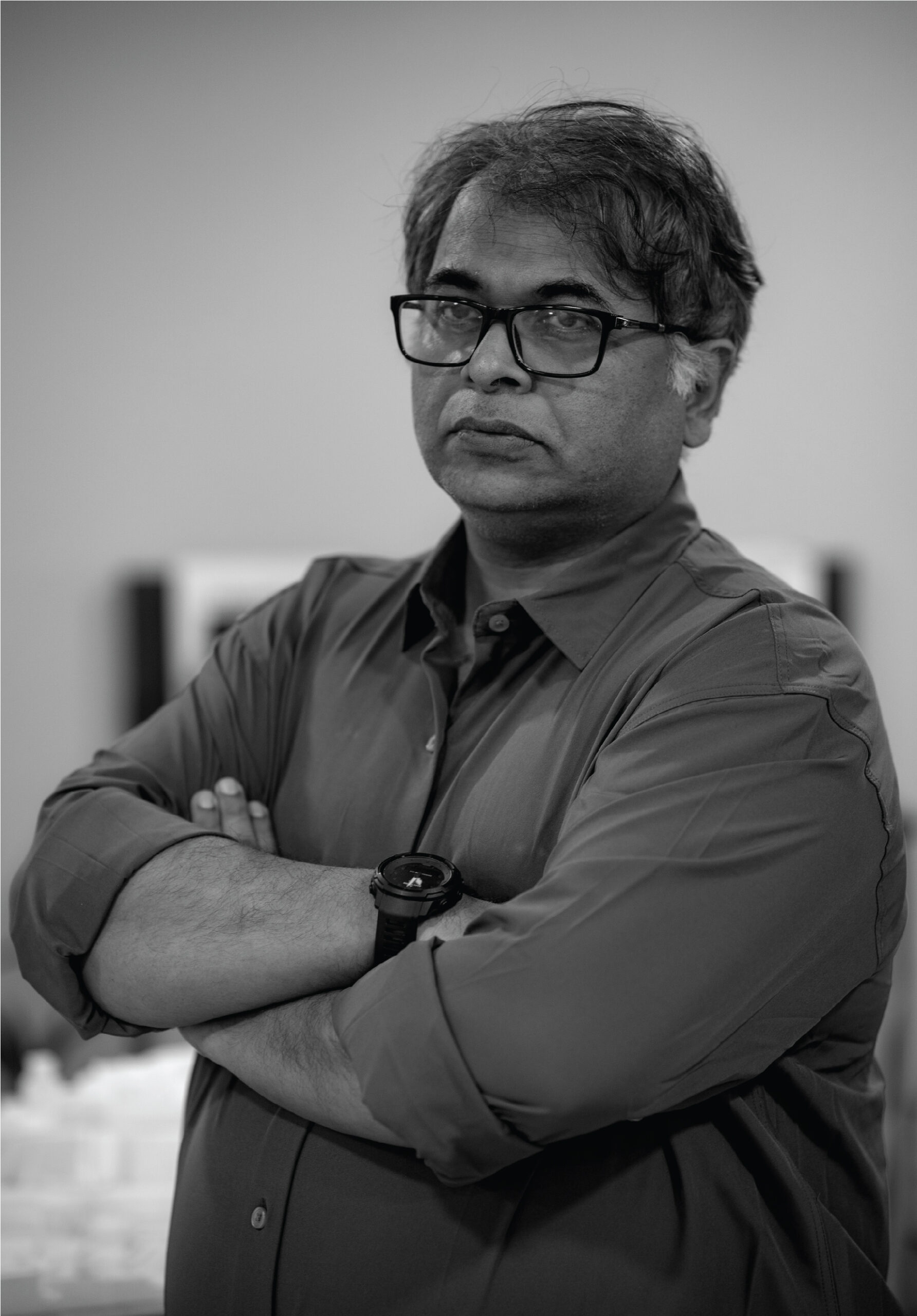
Shahriar Iqbal Raj
Architect | Educator | Academic Leader
Associate Professor & Chair, Department of Architecture, North South University
Sometimes it is a word of encouragement during a studio review; sometimes it is a criticism that feels uncomfortable at the time but makes sense years later. At other times, it is simply a new perspective a teacher helps a student discover. Architecture students often remember their teachers long after they forget individual lectures, because the lessons go beyond the curriculum and gradually become part of who they are. It is within this lasting influence that Architect Shahriar Iqbal Raj’s philosophy as an educator takes shape, teaching not merely to deliver knowledge, but to help students learn how to see, think, adapt, and grow into responsible human beings. For Architect Raj, Associate Professor and Chair of the Department of Architecture at North South University, that process has been unfolding for more than two decades.
His teaching journey was not rooted in a romanticized idea of academia as a calling from the very beginning. Rather, it began as a professional role he took on and committed himself to. What followed, however, was a vast opportunity to explore. Private university education gave Architect Raj room to engage not only with teaching students but also with curriculum and institutional development and research in ways that gradually expanded his own understanding of architecture. Looking back, he feels that without that exposure, his professional outlook might have remained much narrower. Teaching became the space through which his own ideas about architecture began to widen.
“When we started, it was an exciting adventure,” he recalls.
The architectural education landscape he entered was very different from today. There were fewer schools, fewer graduates entering the profession, less institutional competition, and comparatively fewer directions available to young architects. Over the years, universities expanded, professional competition grew, and technology transformed both architectural practice and the way students learn. With those changes, Architect Raj’s understanding of the teacher’s role also evolved. He sees a distinction between teaching as a job and accepting responsibility for the people being taught.
“A teacher should be a role model for academia and for society as well,” he says. “If you want to be a role model, you have to lead.”
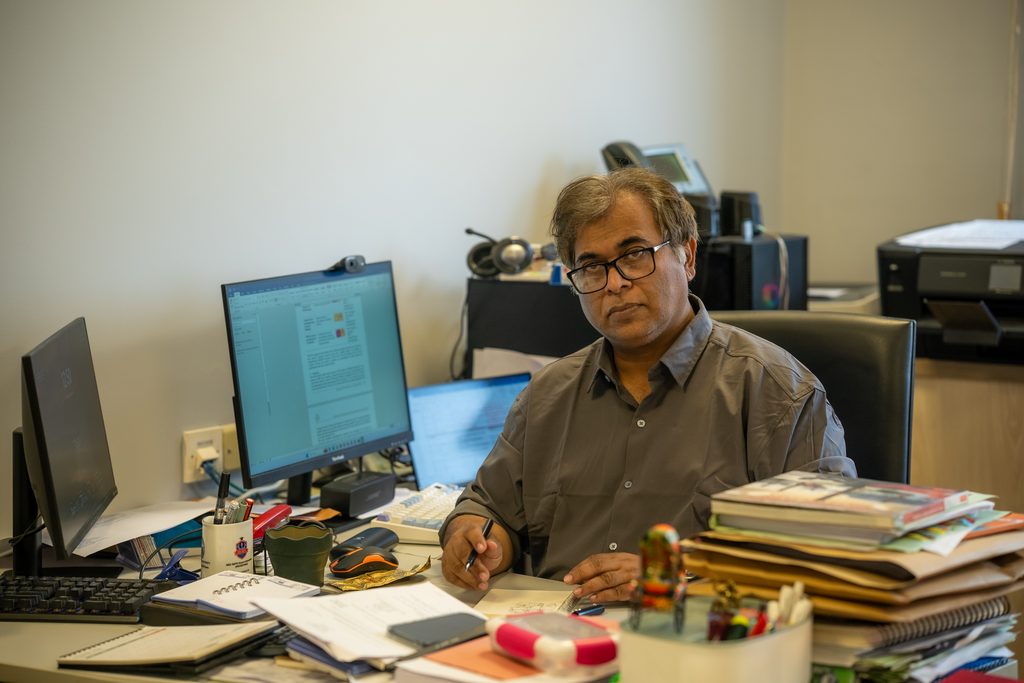
That leadership, however, requires the teacher to change as much as the students do. Rather than remain attached to familiar methods, he adapted as the profession evolved. That experience continues to inform how he responds to change today.
“And every day I try to learn something new.”
He immensely enjoys engaging with students in academic discussions. For him, this willingness to remain a learner while being a teacher is essential. New generations arrive with different expectations and ways of interactions with the world. New technologies reshape professional practice; an educator who stops learning risks becoming disconnected from both.
Artificial intelligence is now one of the clearest examples of that change. Architect Raj sees AI as a development that can no longer be ignored. He acknowledges the controversy surrounding its growing energy consumption and environmental impact while also recognizing the time, effort, and efficiency such technology can offer. For him, the question is not whether AI should be used, but how consciously and responsibly it is used. This reflects a broader principle in his teaching: progress should be embraced, but not uncritically.
Students should learn to benefit from emerging technologies while remaining aware of the consequences and responsibilities that accompany them.
Responsibility also enters his classroom through another familiar challenge in architectural education, which is the gap between theory and practice. Architect Raj has remained engaged with professional practice alongside academia, allowing him to encounter both sides closely.
“I know the practical side, and side by side I know my classroom,” he explains.
Architect Raj sees the educator’s task as helping students connect them. Architectural education, after all, must prepare students to carry ideas into a world that is rarely as controlled as a studio exercise.
His own career reflects that same refusal to remain within a single boundary. Alongside architecture and teaching, Architect Raj has worked in journalism, writing about architecture, property, development, and the built environment. His research has also extended into wider urban and infrastructural questions.
Perhaps this is why he resists reducing architectural education to the production of building designers.
“What we learn here is that we learn how to see,” he says.
The statement appears simple, yet it sits at the heart of his understanding of studying architecture. Students learn to observe, interpret, question, and find relationships between things. They learn to approach complexity and search for possibilities. Those abilities do not belong only to conventional architectural practice.
“So you can be anything if you study architecture, if you try to understand,” Architect Raj says.
A graduate may become a practitioner, researcher, or academician but may equally move toward urban studies, furniture design, journalism, writing, or another field altogether. He fondly remembers a student who moved into designing cars after graduating. For Architect Raj, that does not necessarily mean leaving architecture behind. The education itself has already shaped how that person thinks.
“In some sense, I feel that being an architect, or being a graduate of architecture, is like a blessing. One can understand and get exposure to many things…”
As the conversation moves from what students can become to what they should become, his answer is much more fundamental.
“The first consciousness should be being a good human.”
The same philosophy returns when Architect Raj speaks about the moments he values most in his teaching career. Over more than two decades, he has watched students enter professional practice, research, and academia, move abroad, and build identities of their own. Some return years later carrying memories of conversations, advice, or lessons from the classroom.
“We don’t want that much from them,” he says. “We want respect. We want their success.”
“I feel proud of them. That is my gratification as a teacher.”
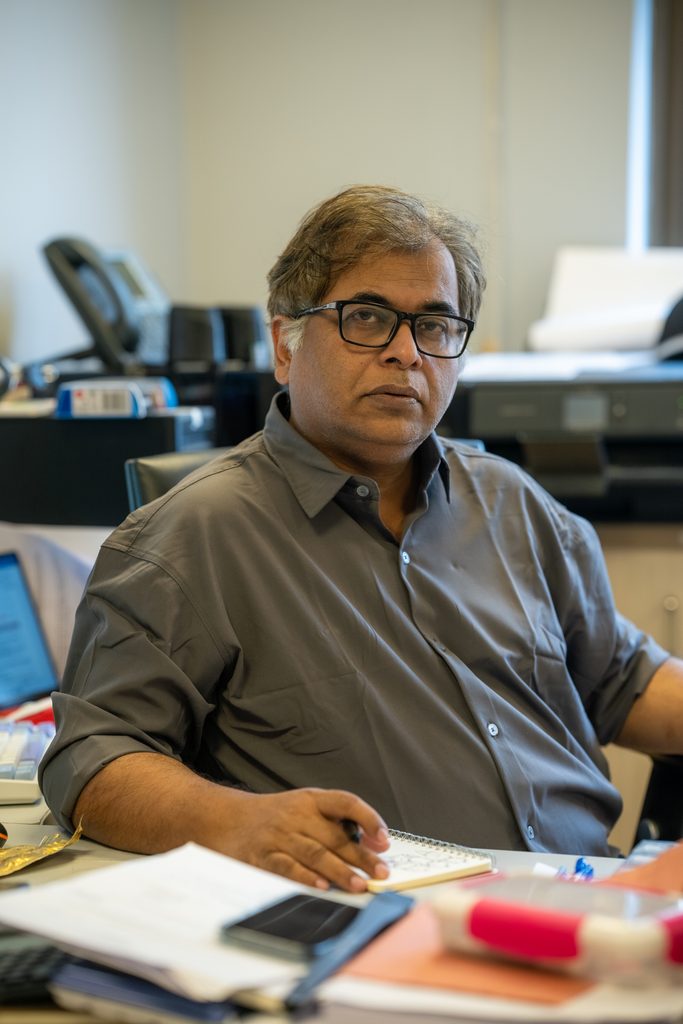
His commitment to future generations is also visible beyond individual classrooms. At North South University, Architect Raj has contributed to revising the undergraduate architecture curriculum, establishing the Building Research Lab, and strengthening departmental research. He believes an academician should not simply communicate existing knowledge but also participate in creating it. He identifies practice, academia, and research as three broad directions available within architecture, with room for them to overlap. Academia, he acknowledges, is not an easy path and may not always offer the strongest financial rewards. It demands patience, continuous learning, and commitment to both teaching and research.
The profession will continue to change. Technologies will evolve, careers will take unfamiliar forms, and future students will ask questions that teachers today may not yet anticipate. Architect Raj’s response is not to provide them with a fixed destination but to equip them with a way of seeing. Perhaps that is the light an educator leaves behind, not an answer students are expected to follow, but enough clarity for them to recognize possibilities of their own. Because long after the lecture ends and the studio empties, that way of observing and understanding may be the lesson that remains.
Copyright © 2026 ArchBiz Magazine. All Rights Reserved.