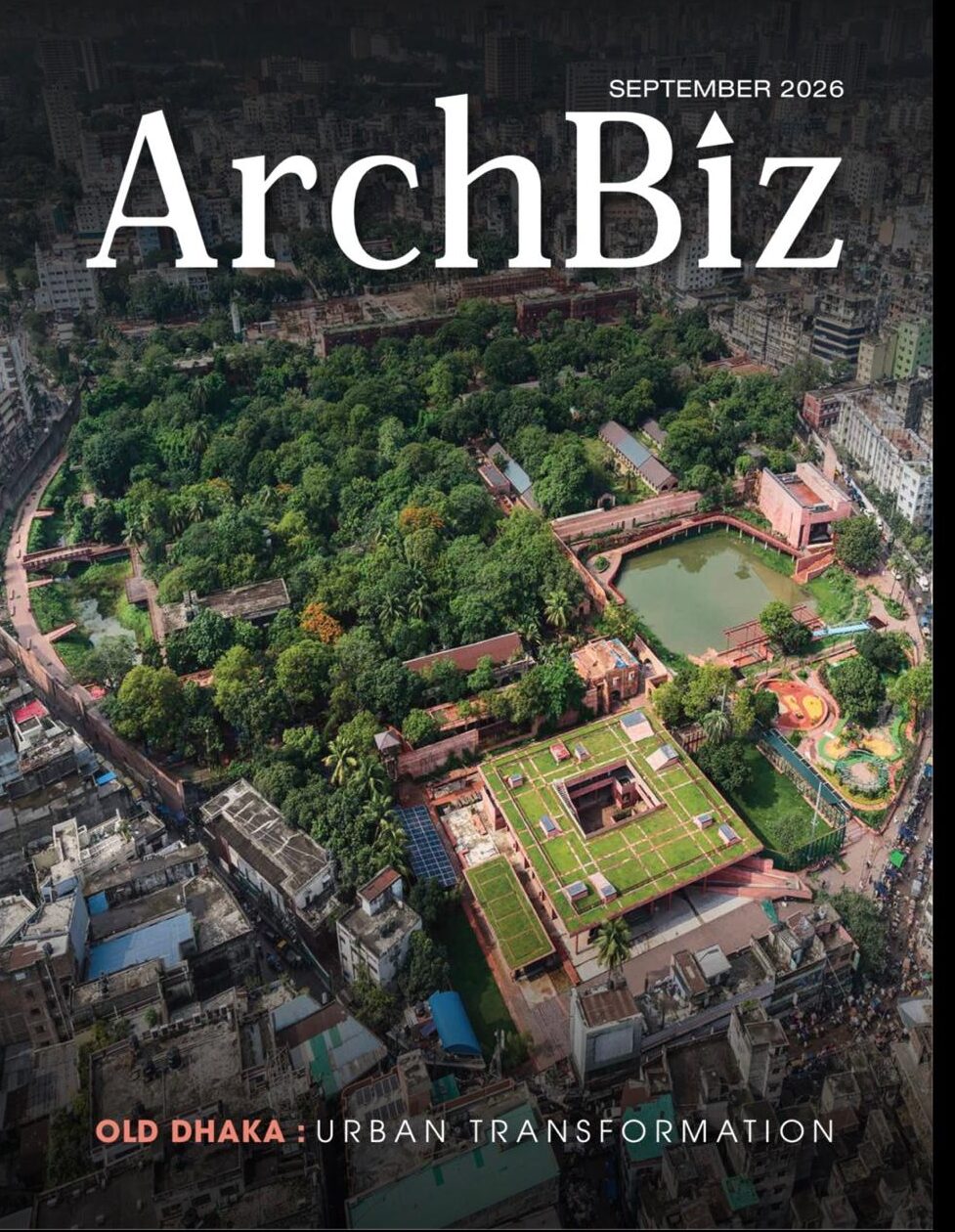


WE WERE NEVER TAUGHT TO THINK
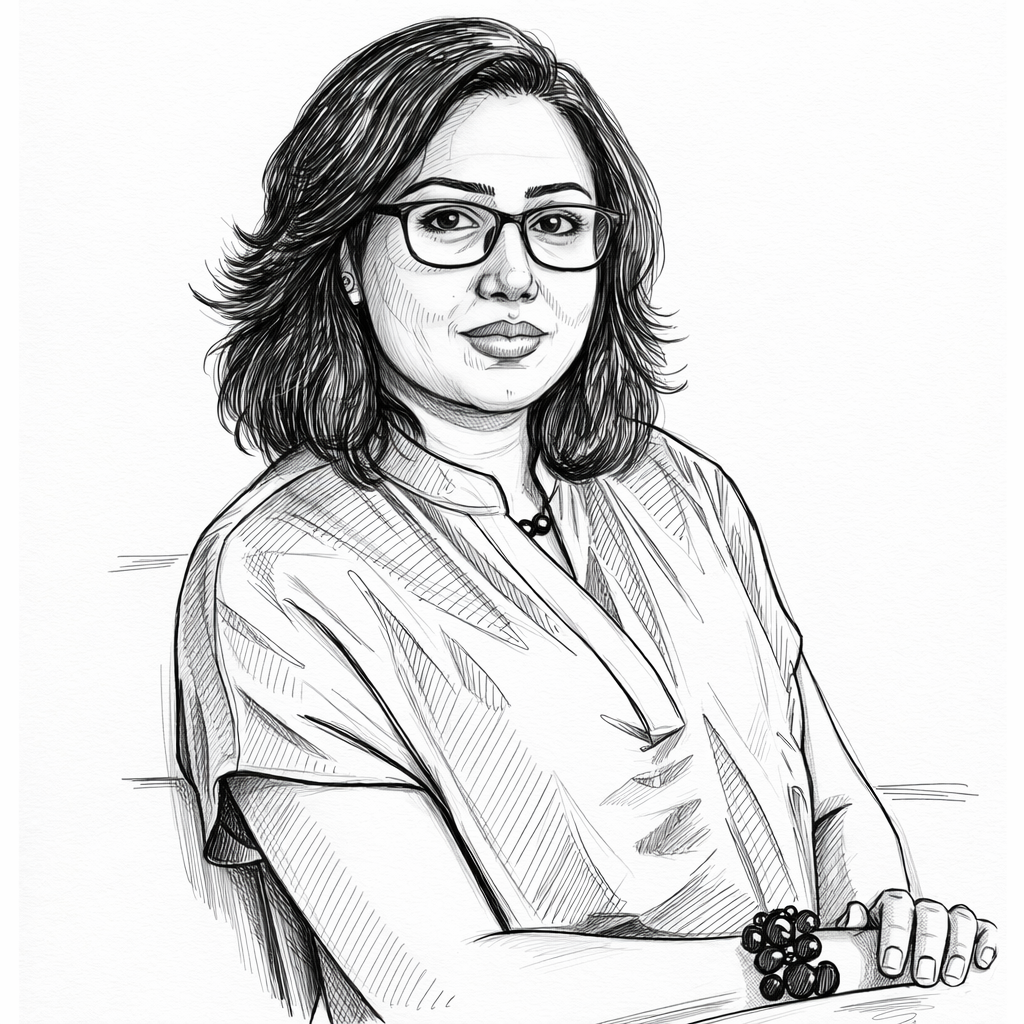
We need to confront an uncomfortable truth; our foundation, the schooling system in Bangladesh, has long operated on a simple, restrictive formula- read, memorise, reproduce. This system starves curiosity. If you were a student who dared to question, challenge, or seek a deeper understanding, chances are you were labelled difficult, not thoughtful. This subtle, unseen discouragement doesn’t disappear; it travels with us straight into university life, making us inherently hesitant to think critically, to question deeply, or to imagine boldly, precisely the essential skills architecture demands.
As someone who has experienced different academic environments, I know this struggle painfully well. The realization hits hardest when observing peers who were raised in truly inquiry-driven systems; they treat questioning as second nature. They don’t feel apologetic or stressed for asking why. The contrast is sobering. We quickly discover abroad that we were never taught to think, let alone think critically. We often worked twice as hard, not due to lack of talent, but because we had to undertake the exhausting process of unlearning memorisation and rebuilding our entire methodology using a critical frame.. That awakening is utterly transformative.
CRITICAL THINKING IS NOT CRITICISM IT IS COURAGE
Let there be no confusion, critical thinking is not cynicism, negativity, or constant fault-finding. It is an act of courage. It grows from curiosity, reflection, and a deep sense of responsibility.
Unfortunately, in our context, there is a pervasive hesitation around questioning. A simple, genuine inquiry can be tragically misinterpreted as arrogance, disrespect, or, as we often say, `বেয়াদবি’. This quiet fear stifles our classrooms and studios, often killing open thought before it even begins. This is why tone-setting is absolutely crucial for cultivating constructive critical discourse in architectural learning environment; it’s a skill we must learn and practice.
Critical thinking is foundational, it cannot be after thought in architectural education in Bangladesh. We need confident thinkers, not obedient drafts-people. It means we must ask why before we even consider what, how, or how much (client driven indeed!).. Instead of asking, ‘What will look good here?’, a critical architect demands to know ‘Why is this form needed? Who does it serve? What social, cultural, or environmental consequences will it bring?’ These questions are not acts of defiance; they are acts of care. They connect design directly to lived reality and remind us that our role is not just creating beautiful projects, but shaping experience, behaviour, community, and ecology. To question is not to disrespect; it is to take responsibility.
Thinking of critical thinking in architecture is like being a cartographer, not just a draftsperson. A draftsperson draws the routes handed to them (memorization), but a critical cartographer questions why certain routes exist, how they affect the landscape and the people traveling them, and then, with that evidence, draws a map that serves a greater, more responsible purpose. This requires courage and reflection.
OUR SILENT WEAKNESS
Architecture schools are meant to be design-driven, and Bangladeshi schools are no exception. Yet a core weakness persists in our context, architectural theory. We unintentionally signal from the very first day that architecture is mostly about ‘design,’ and newcomers absorb this without question. We try to avoid theory, we fear it, and we treat it as a burden, instead of seeing it as the vital lens through which architecture truly becomes meaningful. The result is predictable; reading becomes tiresome, reflection becomes rare, and discourse becomes thin. We replace mandatory reading lists with presentation slides, and we substitute “reading architecture” with “Pinterest-ing and Instagram-ing architecture.” In doing so, we lose something vital, the practice of observing the world beyond our screens, our own physical presence, the human and non-human rhythms around us, and the experiential layers of space, light, sound, behaviour, and context. These are the multi-granular insights through which architecture truly reveals itself, yet they quietly slip out of our education. Without learning to see, we rush to draw; without learning to experience, we rush to imitate.
This creates a widening gap between design and thought. We do not have time to ‘think critically’ about ‘design’ because we are very busy ‘designing’! Architecture then risks becoming mere drawing rather than thinking. And drawing without thought? That is not design; it is decoration! Now, don’t kill me for saying this, there is nothing wrong with decorating. It has its place and its own beauty. But that is another conversation for another time.
FROM HABIT TO PHILOSOPHY: DESIGN AS INQUIRY
Our design choices are never random; they are shaped by our upbringing, culture, and training. The moment we stop accepting our tastes at face value and ask `why’, intuition matures into insight, habit transforms into intention, and taste begins to mature into philosophy. Critical thinking is the tool that liberates us from unconscious biases and opens the door to ethical, contextual, and deeply grounded architecture. Design is ultimately inquiry, reflection, and responsibility.
We see this demonstrated by Bangladeshi scholars Reza’s New-Contextualism grounds urban design in time, data, and justice. Kabir redefines authorship by putting communities at the centre of decision-making. Shafique forces us to confront the political dimensions of space in Dhaka, urging us toward grounded, responsible engagement. Their work shows that critical thinking is not abstraction or ego; it is humility, attentiveness, and a profound ethical commitment to reality.
MINDS THAT GO BEYOND THE BEYOND
Thought itself is invisible, as Bryan Lawson noted. This invisibility is a gift; it grants us the freedom to explore, doubt, revise, and imagine before drawing. Critical thinking resists instant answers. It is the discipline that, for instance, challenges Dhaka’s fascination with glass façades, forcing us to ask ‘Do these choices truly serve our climate, or do they deepen our environmentall crisis? This is Donald Schön’s ‘reflection-in-action’ the constant dialogue between the thought and the practice. Ultimately, critical thinking in architecture is not a simple technique, but a posture, a discipline, a way of seeing the world. It is what transforms design from imitation into intention, from building into meaning.
To build better cities, we must first build better minds. We need minds unafraid to ask, `Why?’ and prepared to look beyond the obvious, beyond the immediate minds that go beyond the beyond.
Ar. Tanjina Khan
Doctoral Candidate, Bartlett School of Architecture, University
College London (UCL), UK
Assistant Professor and Architect, Department of Architecture,
Brac University, Bangladesh
Copyright © 2025 ArchBiz Magazine. All Rights Reserved.