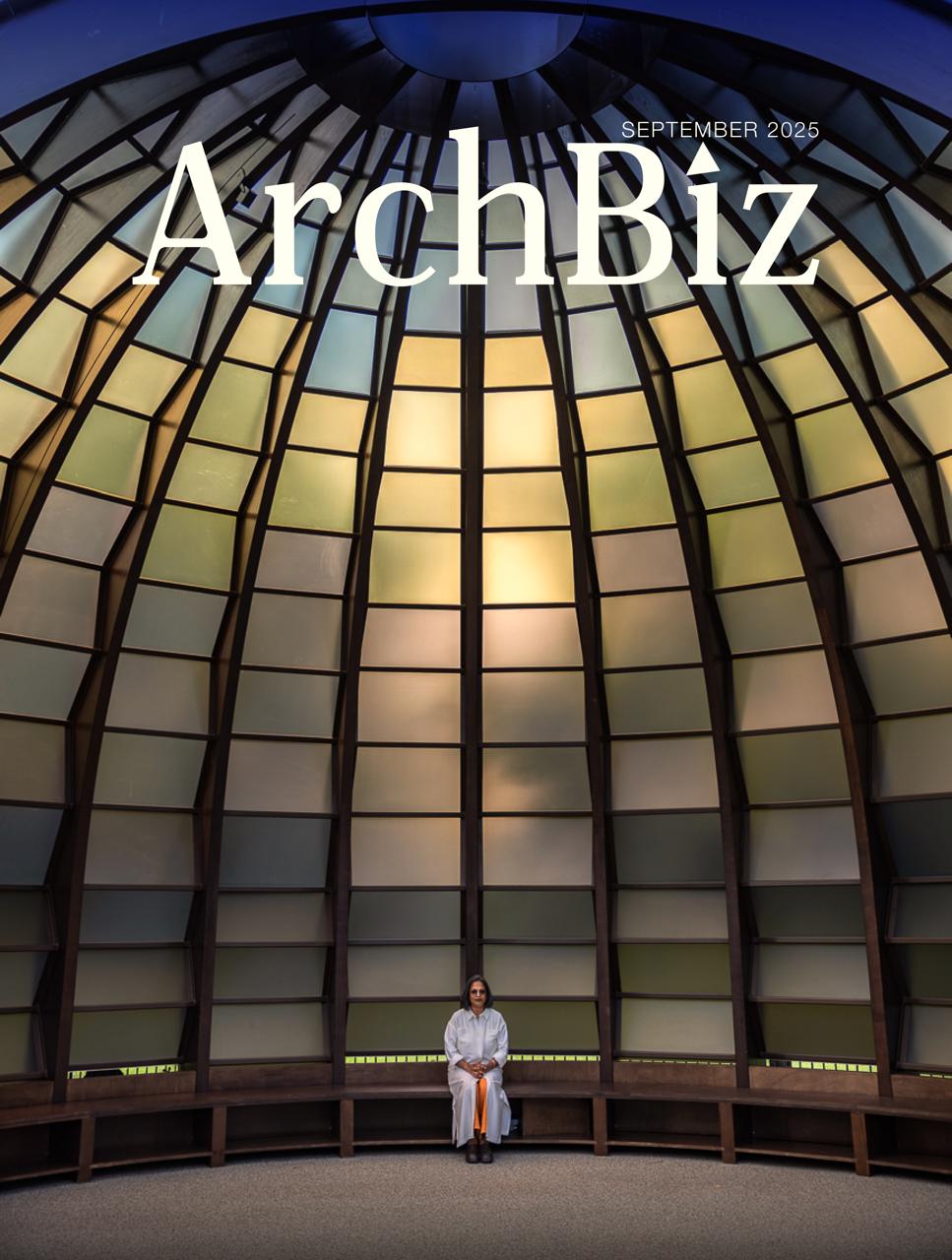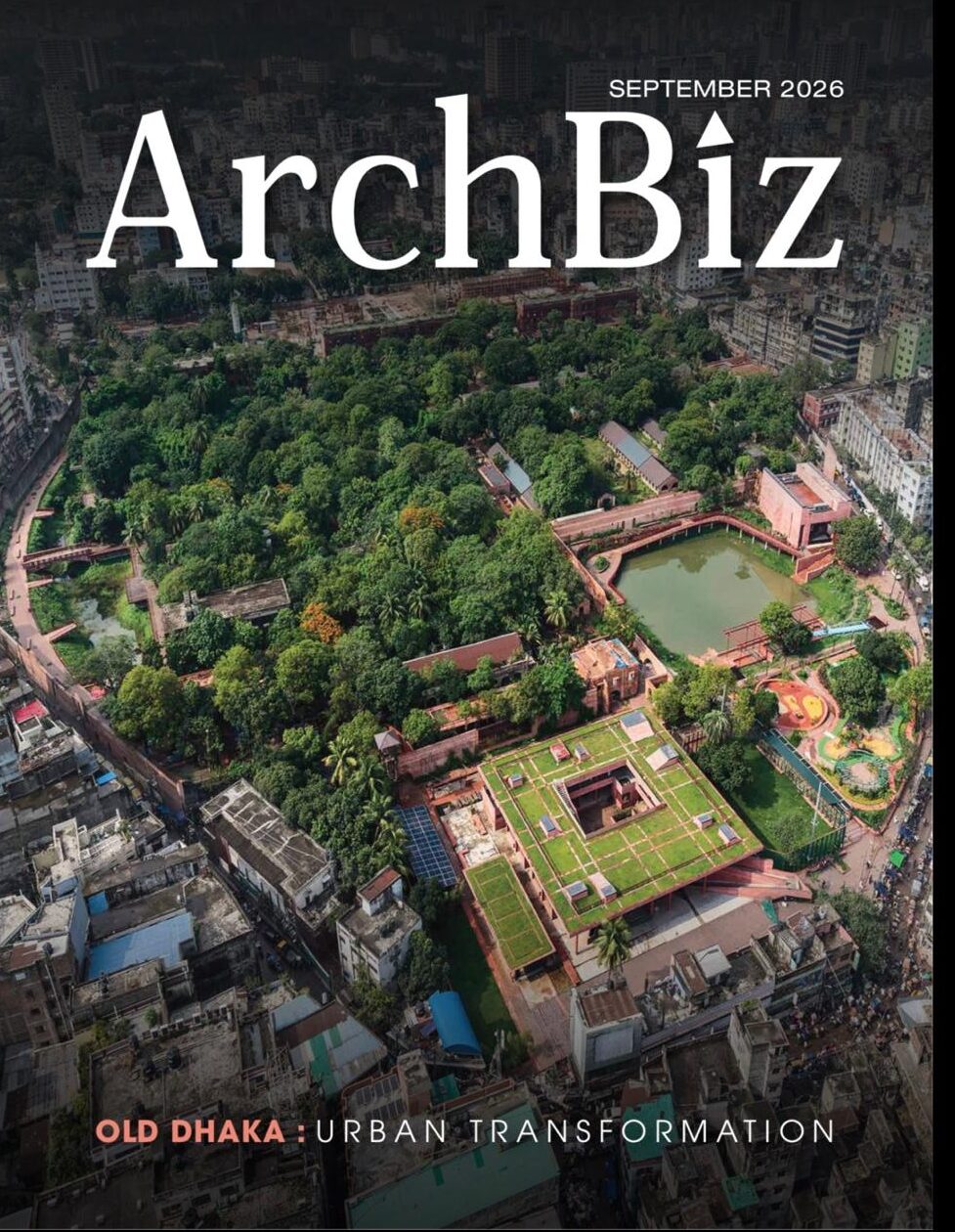


“I don’t want to demarcate myself with titles like ‘photographer,’ ‘faculty,’ ‘podcaster,’ etc. Rather, I prefer to deem myself as a practitioner in the realms of visual art. I don’t even actively approach architectural photography as my profession.”
Asif Salman will most likely welcome you with the aura of his amicable smile, followed by easy-going conversations. But when I looked closer through his thick-framed eyeglasses, I noticed a thoughtful introvert whose grit in following his heart made him the trailblazer of bringing the genre of architectural photography under the spotlight in Bangladesh. Asif has also shown his prowess on architectural short films/documentaries and eye-catching 3D animations. Furthermore, he entrepreneured start-ups, got invited as a TEDx speaker, and started his podcast, ‘Diary of an Architectural Photographer’—which has already gained immense importance due to its archival value. And that is just a glimpse of his varied accolades; you can peek at the longer list on his neatly maintained website.
When I asked him about his favorite highlights from a career spanning roughly a decade, with his signature smile, he replied, “None. I have just begun.”

How was your childhood?
School was very painful for me.
Otherwise, it wasn’t that terrible. I was the imaginative, free-spirited type. I was a bookworm who loved wandering around and exploring various things. I enjoyed drawing, sketching, and collecting stamps, among other activities. Later, I also took an interest in watching films
I ran away from home a few times as well, haha!
My father was a banker whose posting shifted to different branches, so we also had to move to those locations as a family. So I mostly grew up around the Jessore-Sathkhira-Khulna belt. Fast forward a decade, it was in Sathkhira where I documented the Friendship Hospital designed by Kashef Chowdhury/Urbana, and the project won RIBA. The publication focusing on that project featured mostly my photographs alongside the legendary Hélène Binet.
That was my breakthrough.

On that note, how did you gradually delve into architecture and later photography?
I was always certain that I needed my freedom. So whatever I would pursue, the nature of the work had to be open-ended. Hence, I had two options in mind: either architecture or fine art. Later, when I came to Dhaka to get enrolled for university, I witnessed the daunting admission culture of public universities and realised I couldn’t survive it. So I eventually chose the most suitable option for me at the time.
And like most architecture students, I found the initial years of learning fascinating, but later they became suffocating. I reached a point where I was adamant about not staying a single extra day.
However, the learning experiences shaped me, and I absolutely love architecture’s multi-disciplinary nature.
Pursuing photography wasn’t planned as well, but I always wanted to work with visuals, so it came very naturally. Furthermore, photographing Bangladeshi architecture represents the country in a different way, as it shows the intellectual side of a nation.
Globally, architectural and real estate photography or documentation is a standard practice that has a decent market, but in Bangladesh we are actually the first generation who managed to bring attention to this genre and make it professional, which is a big leap from yesteryears when foreign photographers were hired with big checks to document local projects. Although this scene is still niche, it’s refreshing to see the growing interest, and some are also pursuing it. However, I want this scene to stay niche. And I do think it will stay niche and won’t be diluted, as it is not for everyone

Who are your favourite artists or photographers? Namely those who have influenced you.
And recently you have met Hélène Binet. How was that experience?
It is very difficult for me to name favorites; there are so many! And I have more favorite artworks than favorite artists, actually. At this moment, flickering in my mind are the works of Bernd and Hilla Becher and Andreas Gursky.
Prior to my recent travel to London in June for Marina Tabassum’s Serpentine Pavilion, I texted Hélène Binet about meeting. She gracefully agreed, and eventually, one fine morning, I had the luck to spend a few hours with her at her London studio. Hélène still shoots in large-format analog. We talked about a lot of things, and she showed me around her studio, her prints and processes, etc. I even got a signed copy of her recent book. It was a mesmerizing experience!

On working with notable Bangladeshi architects and your take on the contemporary architecture practice in Bangladesh.
If I had to highlight two very important figures for me, it would be Marina Tabassum and Mustapha Khalid Palash.
Despite Marina Tabassum being a doyenne figure not only in Bangladesh but also in the global architecture scene, she is very comfortable to work with. It is difficult for me to put into words what a brilliant architectural mind Marina Tabassum has; her work process is so neat, and she just knows what she is doing. She profoundly inspired me.
I have learned a ton from Mustapha Khalid Palash. Seldom have I seen an architect with such a level of technical proficiency. But the most important thing that I have learned from him is regarding the crucial aspect of making a living as a creative practitioner in Bangladesh.

And despite the greater realities in Bangladesh, the architecture scene is fascinating. Our architects are vastly underpaid, especially the most honest ones, and yet they put in so much effort just to bring their beautiful visions to life.
Copyright © 2025 ArchBiz Magazine. All Rights Reserved.