


Located at Banglalink Center on Bir Uttam Mir Shawkat Sharak in Dhaka, the Banglalink Service Centre rethinks the conventional customer-service environment through an approach centred on calm, trust and human connection. Completed in 2026, the commercial interior project is conceived around a simple yet powerful idea: SANCTUARY.
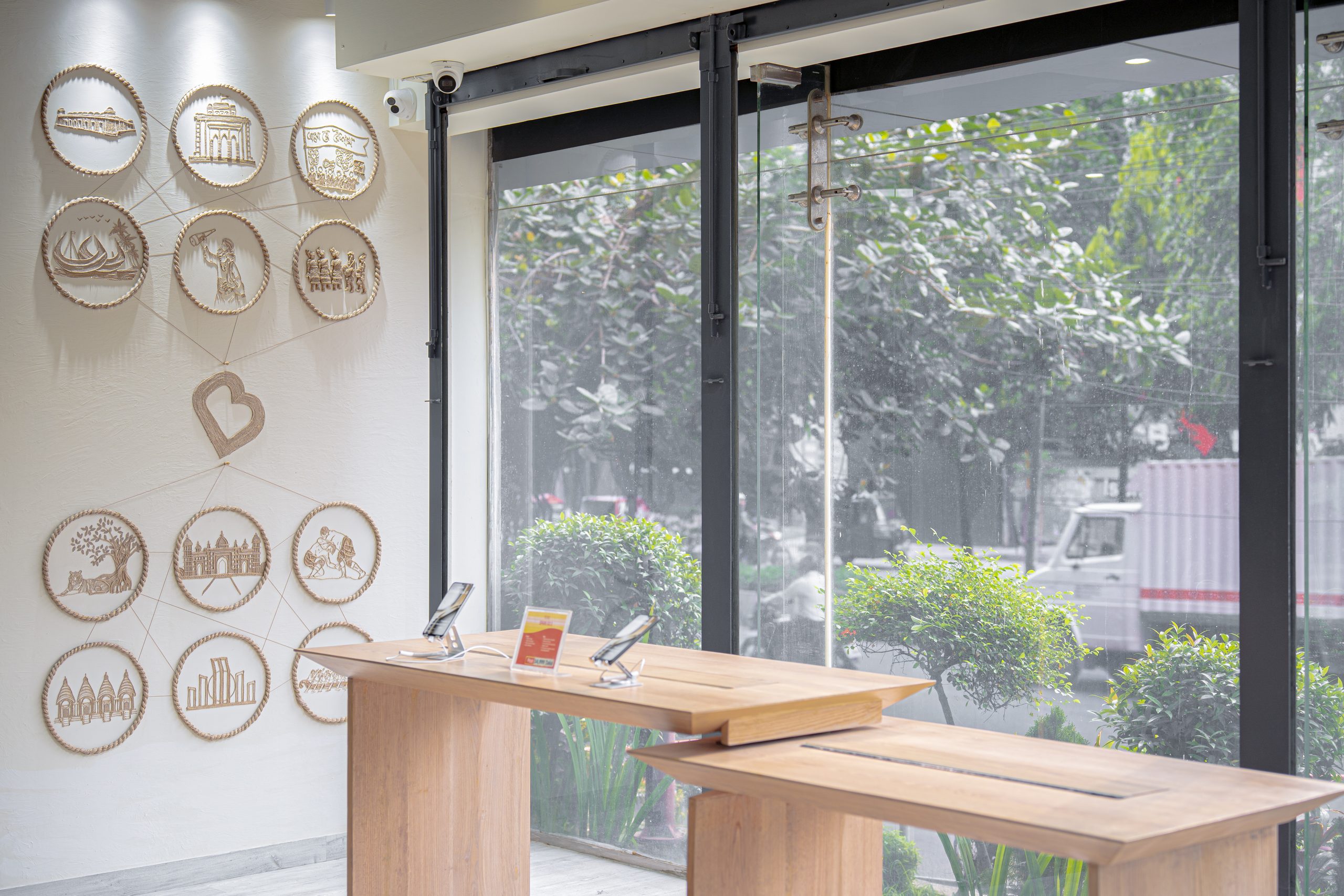
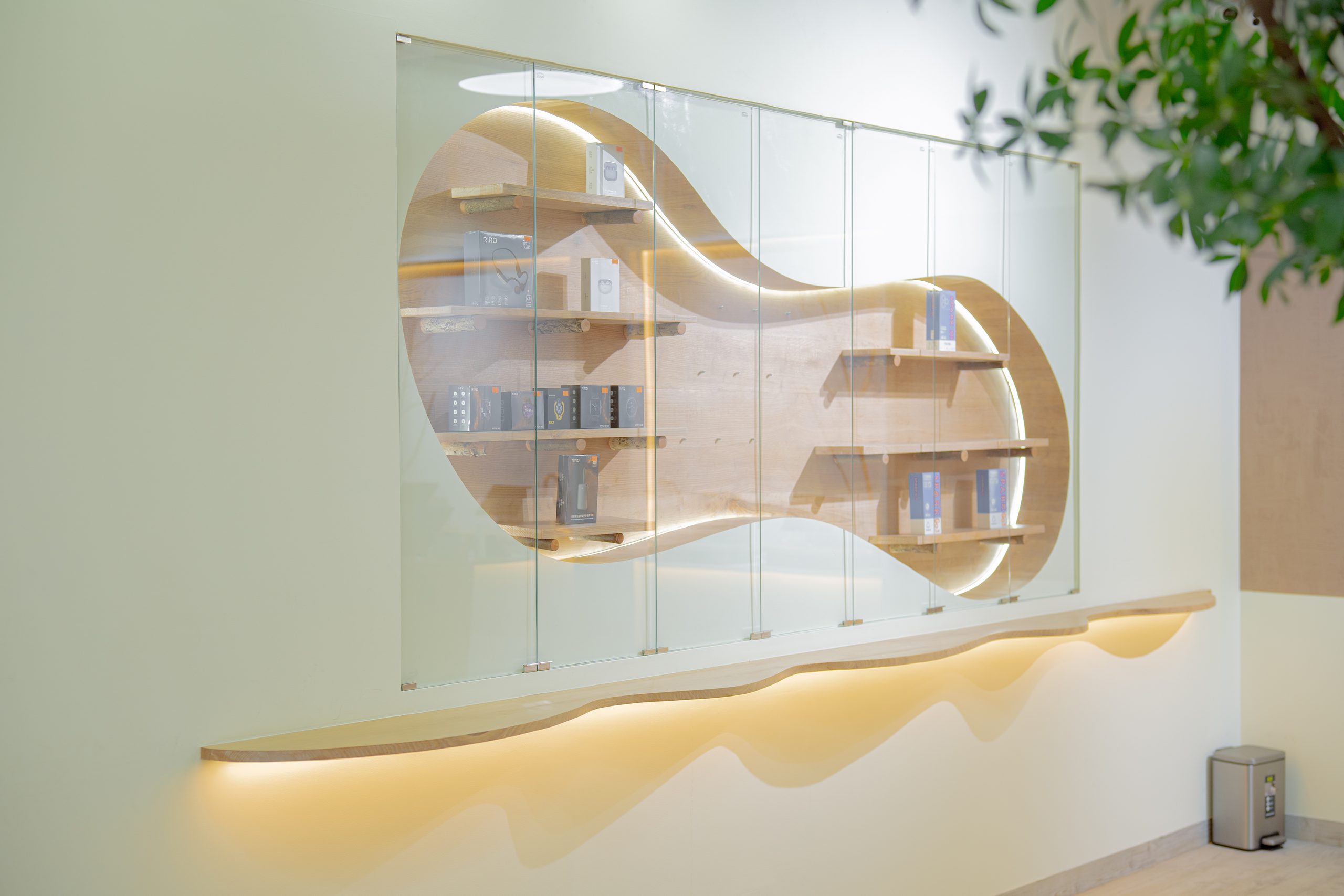
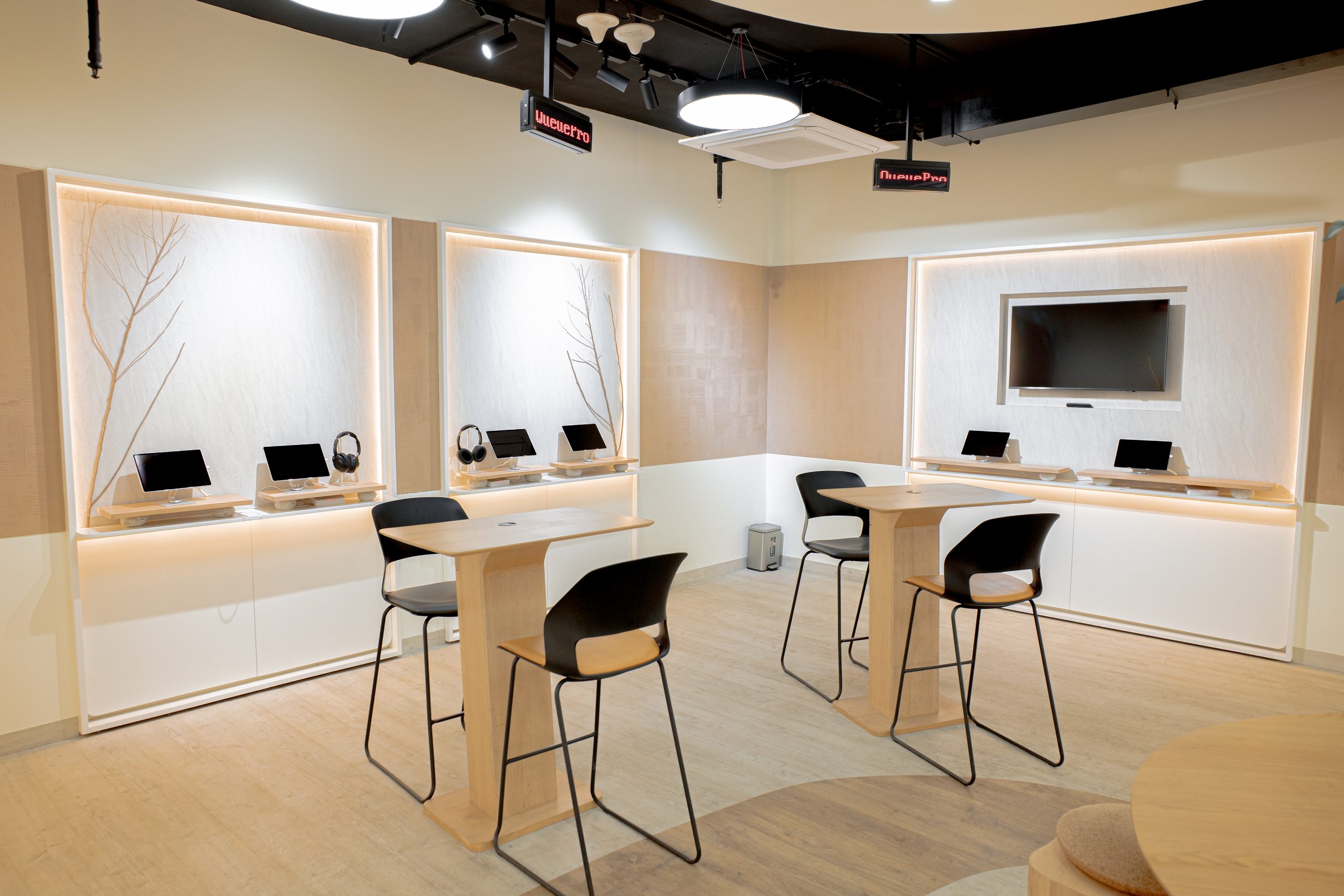
Rather than treating the service centre as a transactional space defined by counters, queues and physical barriers, the design seeks to transform the customer journey into a more welcoming and reassuring experience. The intention is to create a place where stress is reduced from the moment of arrival and where customer and service agent can engage as partners in solving a problem.
From Service Desk to Shared Experience
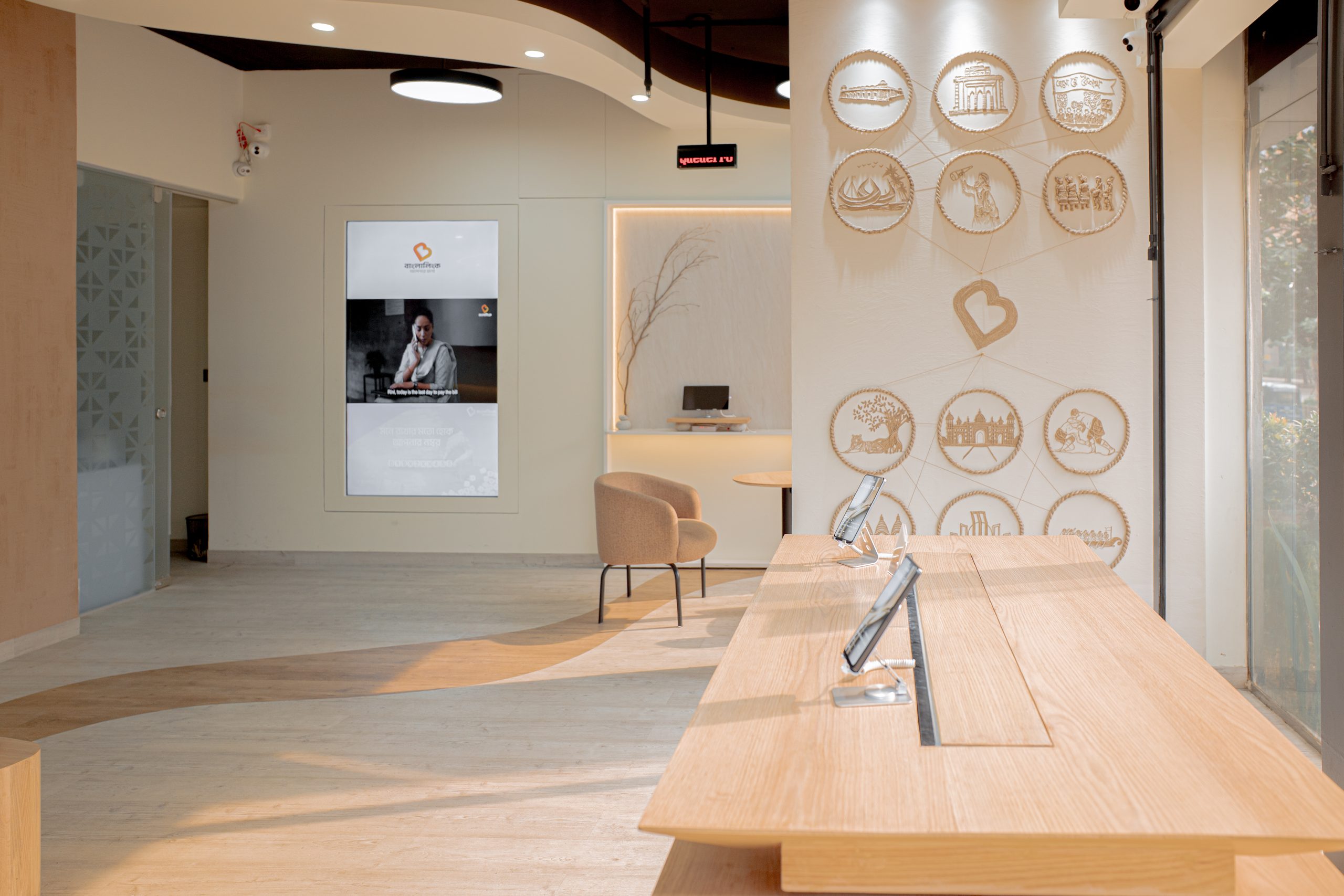
At the heart of the concept is the removal of the traditional service-desk barrier. Instead of positioning the customer on one side and the agent on the other, the design brings them together. When a customer’s digital token is called, the service agent approaches and sits beside the customer, creating a more informal and collaborative interaction.
This seemingly simple spatial decision carries a larger message. The relationship is no longer framed as agent versus customer, but rather as “us versus the problem.” Sitting side by side encourages trust, collaboration and a sense of togetherness, turning the service process into a shared experience rather than a conventional transaction.
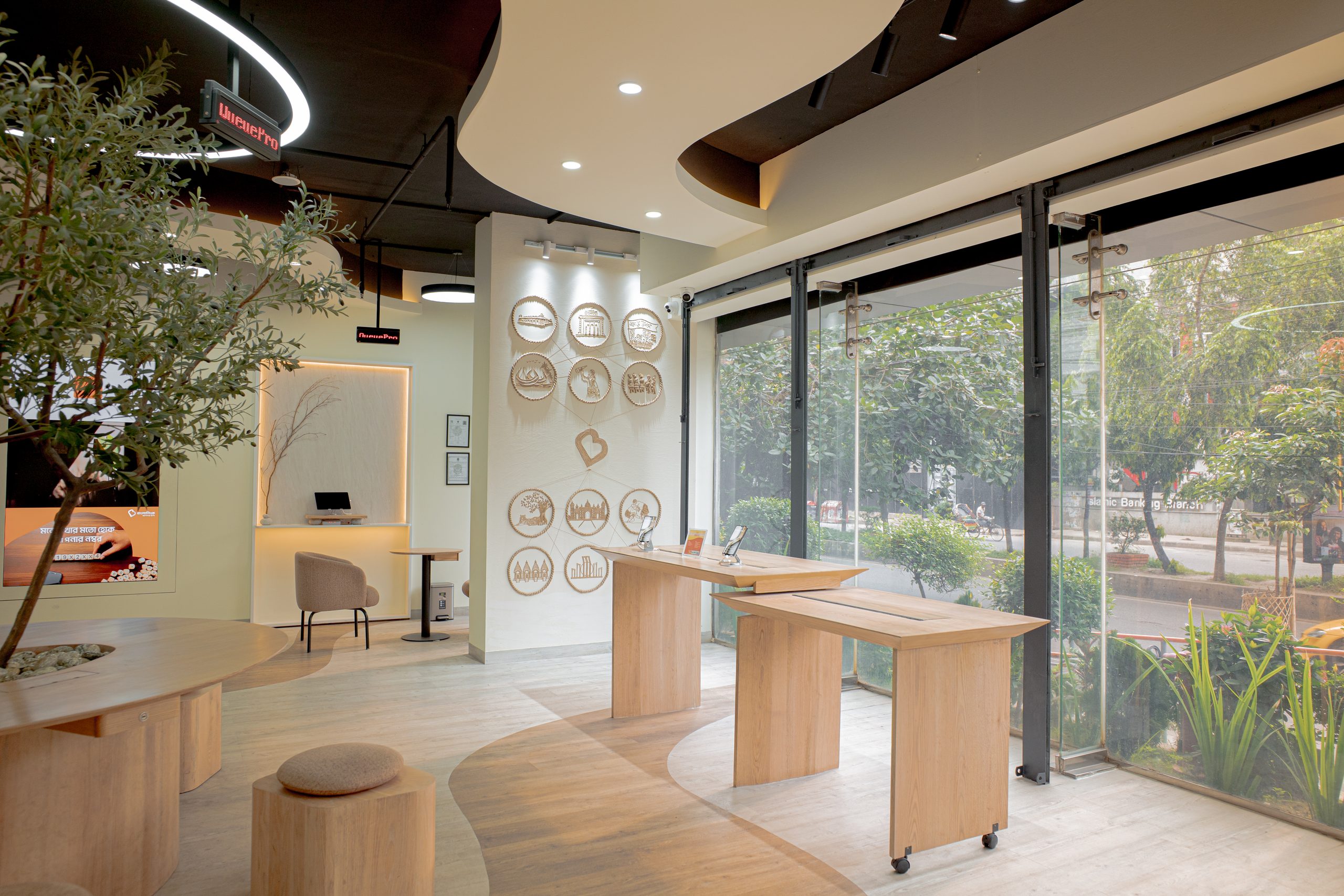
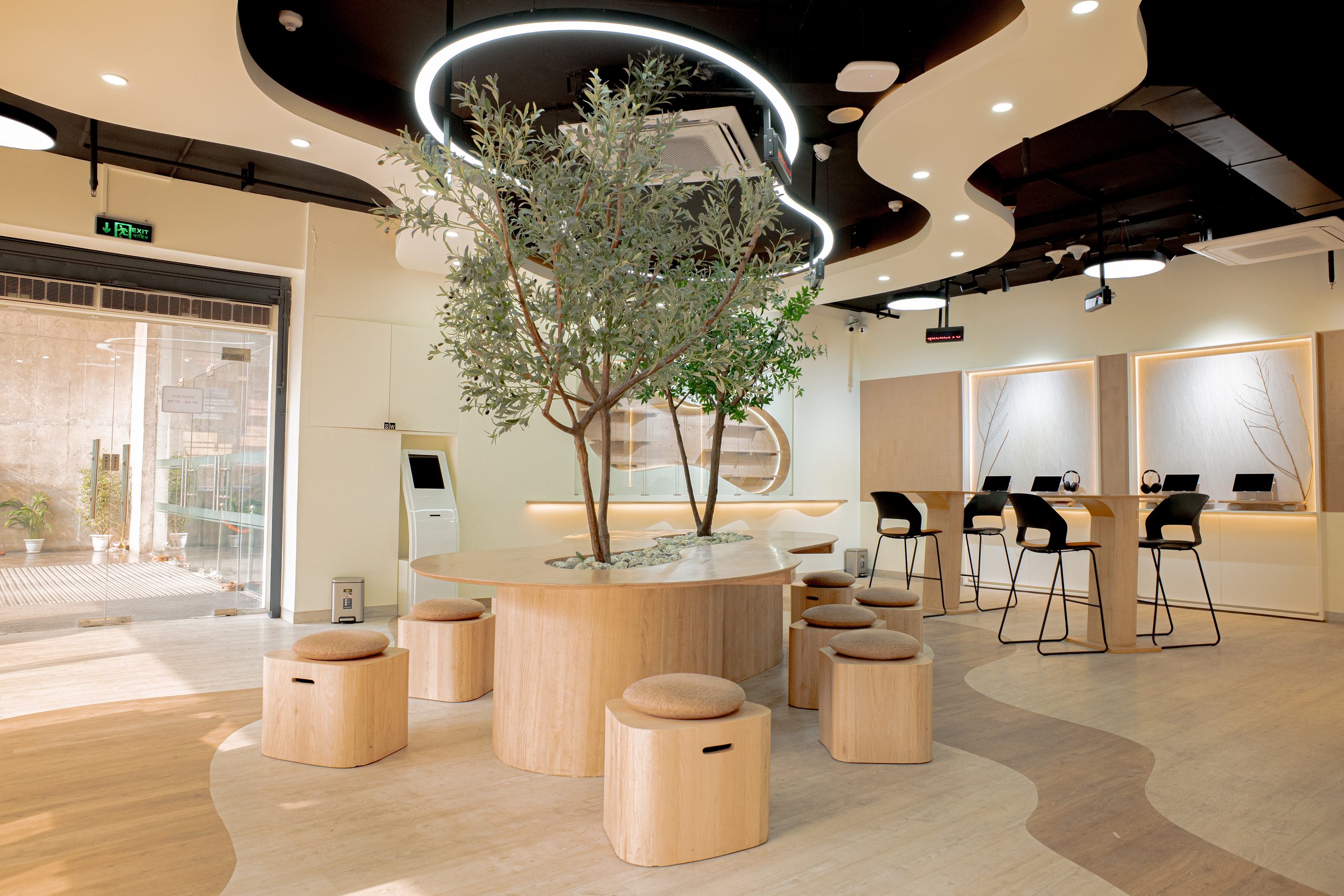
The spatial arrangement is also designed to remain flexible. Reconfigurable seating allows the environment to adapt to different requirements while reducing the visual monotony often associated with service-oriented interiors.
Designing for Calm
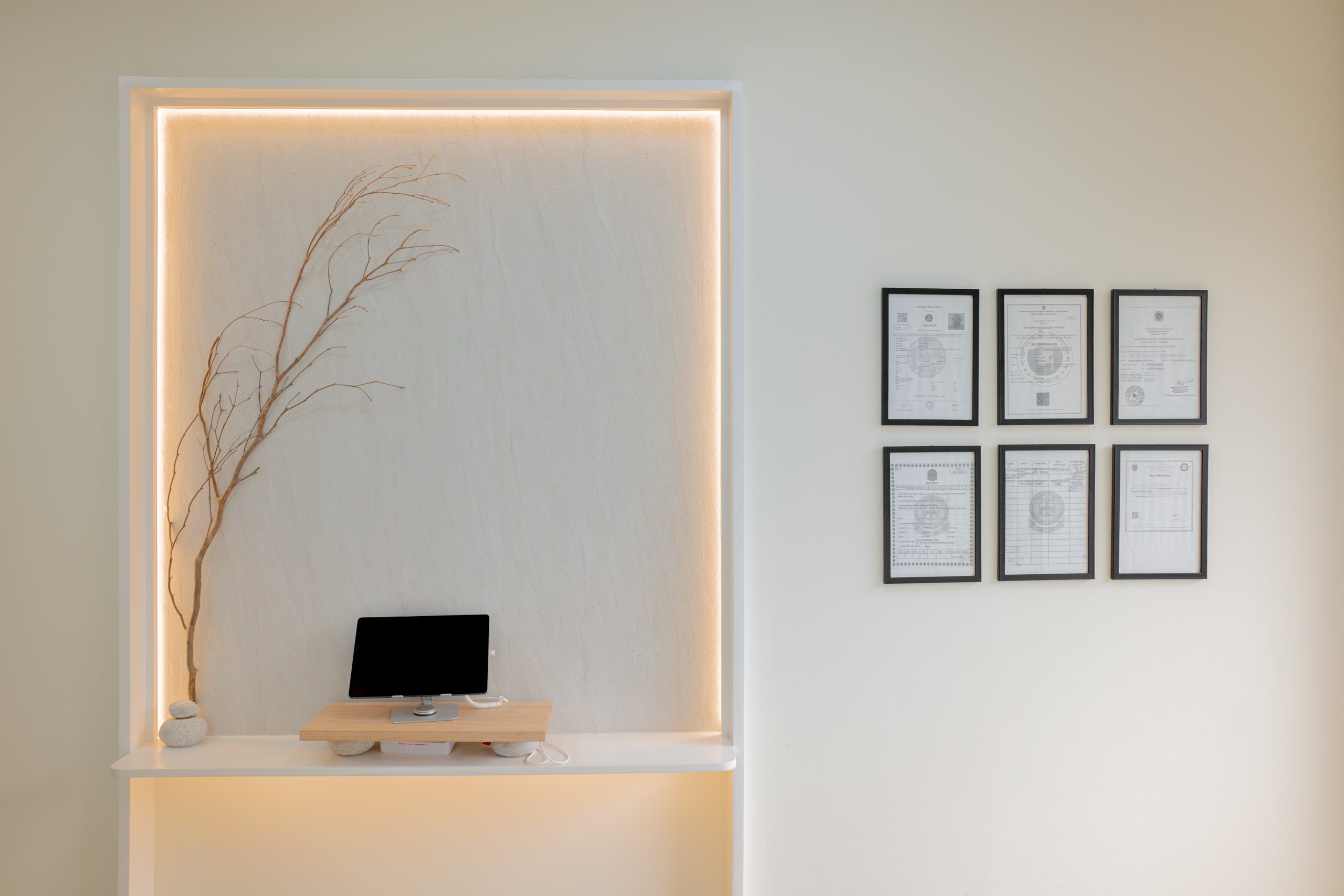
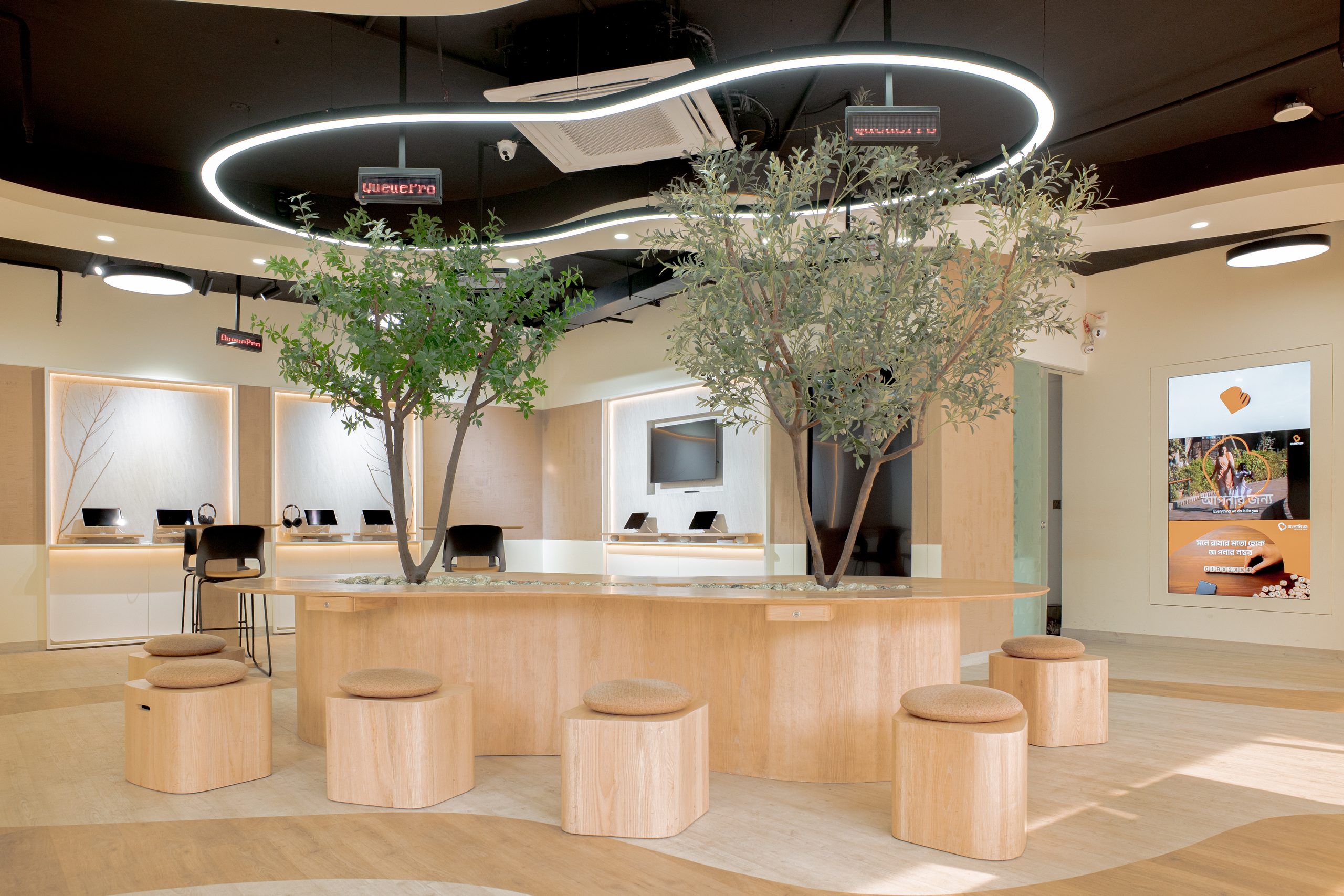
The sanctuary concept extends beyond furniture and spatial planning into the sensory experience of the interior. Soft, warm lighting at approximately 3000K establishes a gentle atmosphere, while controlled soundscapes and white-noise music help moderate the acoustic environment. Refreshed airflow further contributes to a sense of comfort immediately upon entering the centre.
Together, these interventions are intended to lower stress levels and establish what the design describes as a “warm welcome.” The objective is not simply to make the space visually attractive, but to create an environment that feels peaceful, protected and guided.
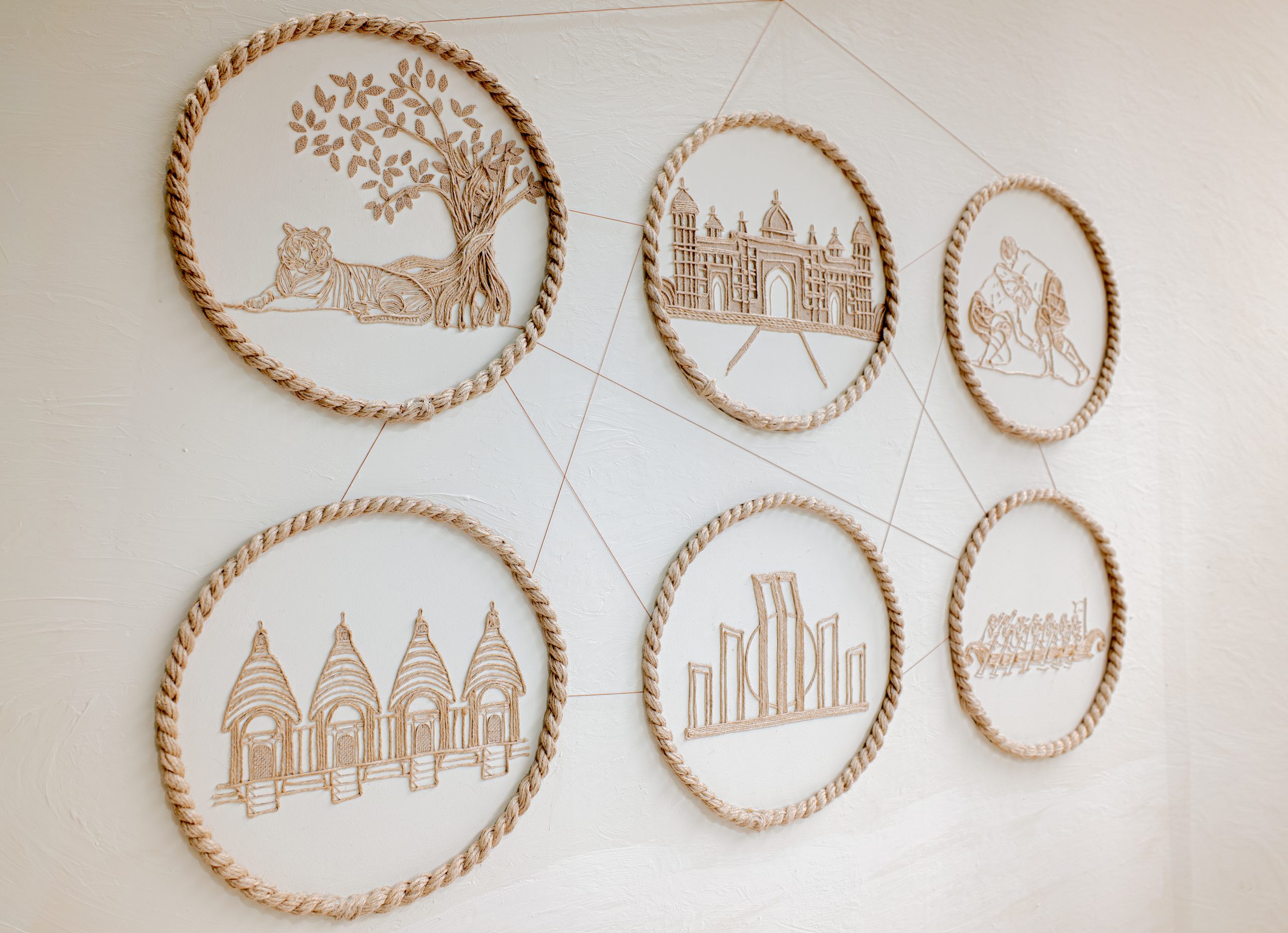
A natural, soft colour palette reinforces this atmosphere. Wood, natural stone, carpet, upholstered seating and cushions introduce tactile qualities and a sense of warmth, while greenery and an artificial tree bring visual references to nature into the interior. The combination creates a subtle impression of retreat within a high-pressure urban setting.
Technology as an Extension of Service
Digital technology is integrated into the spatial experience rather than treated as an isolated feature. Upon arrival, an agent greets customers, guides them through the service process and assists with the collection of a digital token.
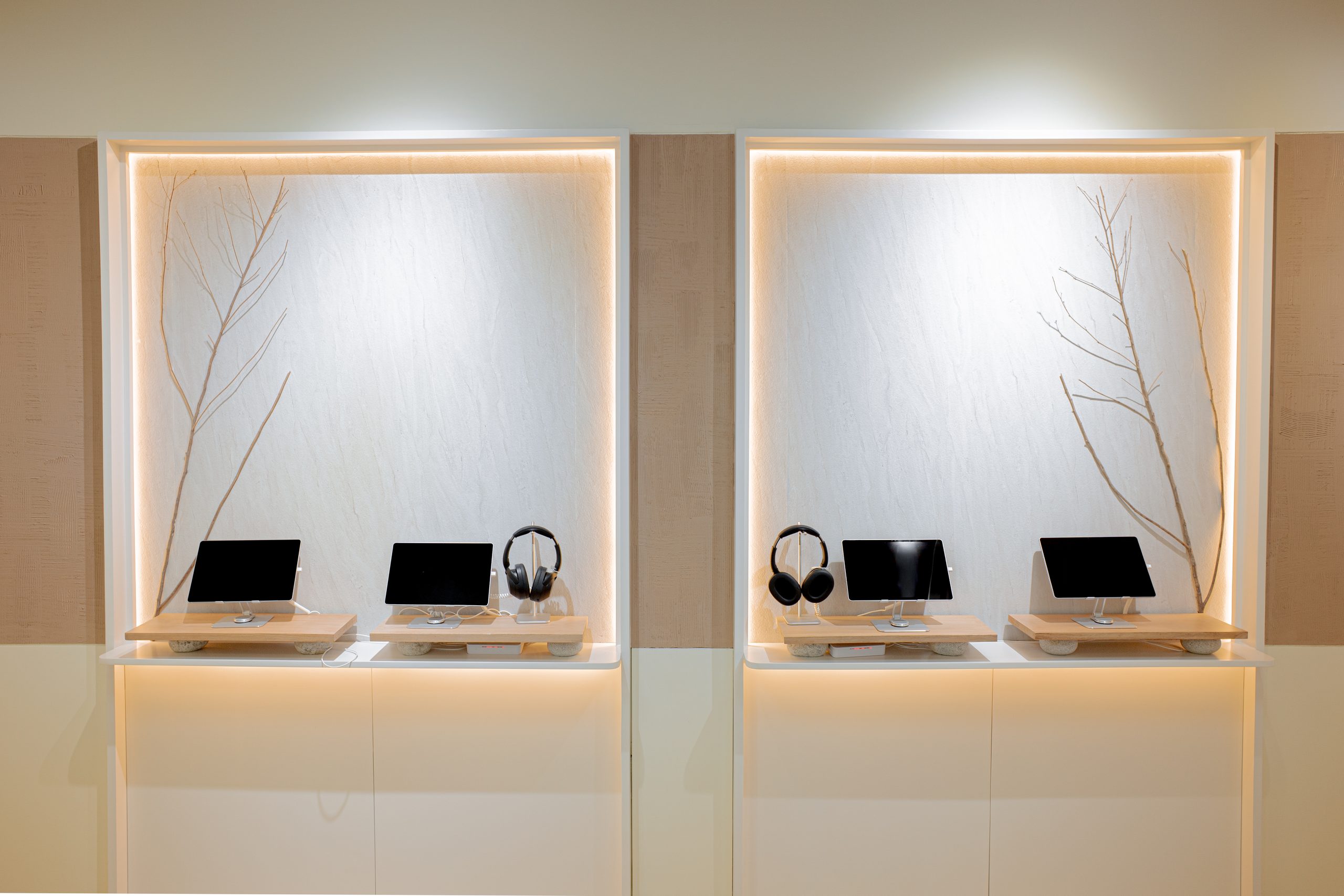
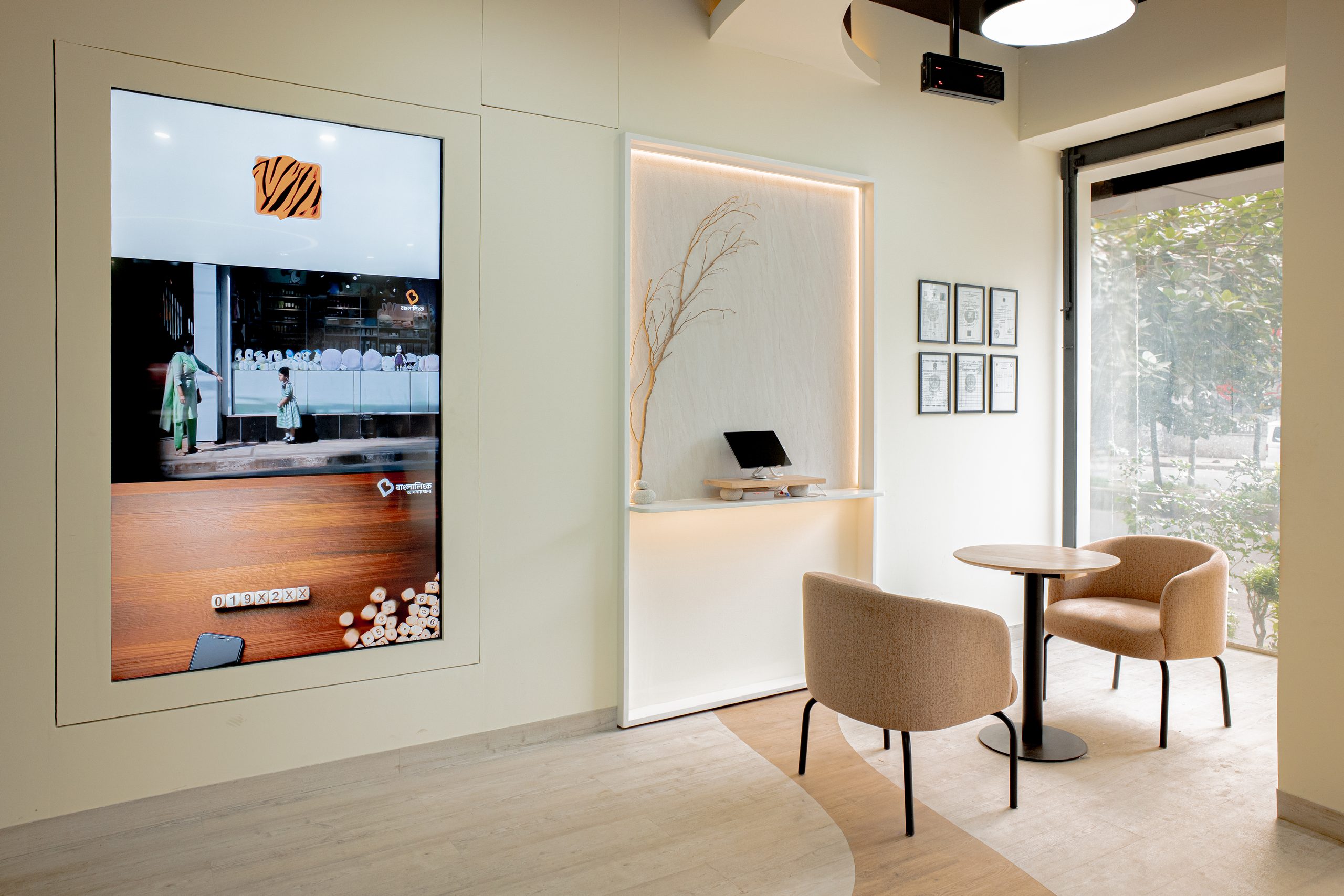
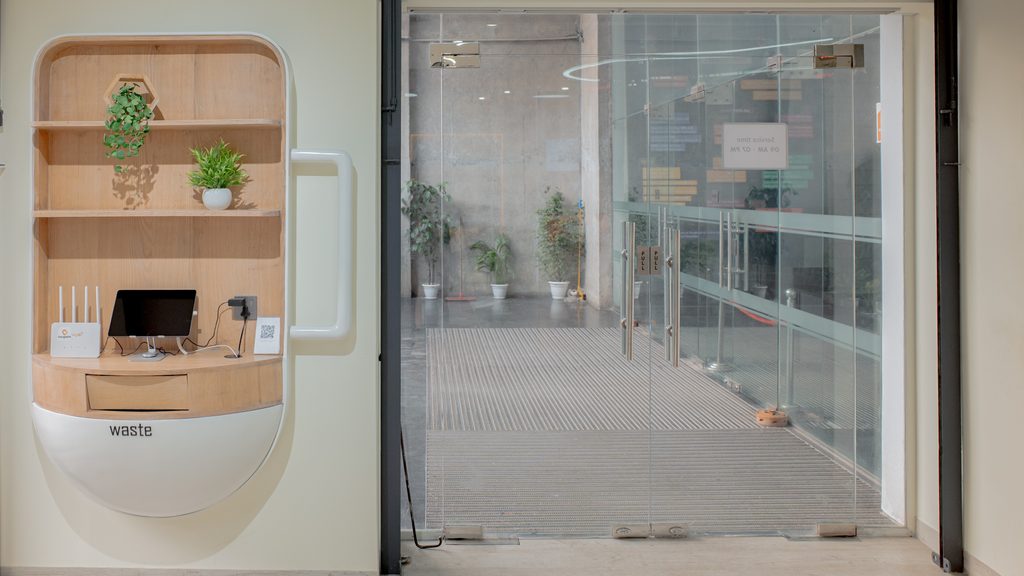
A movable wooden stand incorporates an interactive digital screen and headphones, allowing visitors to explore Banglalink’s digital platforms while waiting. Additional interactive screens are positioned beside seating areas, enabling customers to experience digital services and access information directly within the service environment.
This integration of technology supports the broader design philosophy: the customer should not have to navigate a complicated service system alone. Instead, physical space, digital interfaces and human assistance work together to create a guided experience.
Flexible, Human-Centred Workspaces
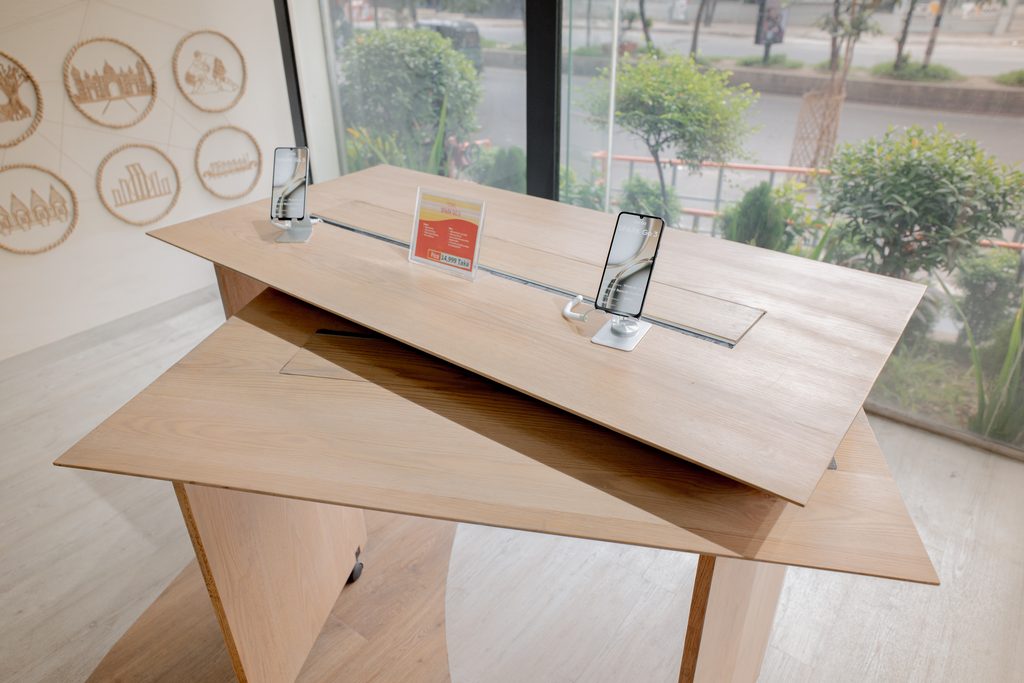
The workstations have been developed with flexibility in mind. Extendable laptop workstations incorporate drawer units and can be rotated or folded to reduce their overall footprint. This allows the service environment to respond to changing operational requirements without compromising spatial efficiency.
More importantly, the furniture strategy supports the project’s central human-centred approach. The removal of rigid service boundaries and the introduction of adaptable elements allow the interior to feel less institutional and more responsive to individual interactions.
A Different Kind of Service Centre
The Banglalink Service Centre demonstrates how a relatively familiar commercial typology can be reconsidered through architecture and interior design. Instead of focusing solely on efficiency, the project places emotional comfort, trust and human interaction at the centre of the customer journey.
By combining soft lighting, controlled acoustics, natural materials, greenery, digital integration and flexible furniture, the project transforms the service centre into a calmer and more collaborative environment.
Conceived by Architectural Team & Collaborators
• Lead Architect: Monojit Sarkar
• Design team : Marina Jahan
• Consultants (structural, landscape, lighting, etc.)
#Banglalink #BanglalinkServiceCentre #Architecture #InteriorDesign #CommercialInterior #ArchitecturalDesign #DesignThinking #HumanCentredDesign #CustomerExperience #SpatialDesign #WorkplaceDesign #BangladeshArchitecture #DhakaArchitecture #ContemporaryArchitecture #ArchBiz #ArchBizMagazine #ArchitectureBangladesh

Copyright © 2026 ArchBiz Magazine. All Rights Reserved